


After a long day in New York traffic, you notice a dull spot on your cheek. You recall reading about a serum that fights pollution and makes skin look brighter. With a quick cleanse and a few drops of vitamin C serum, your morning routine becomes a repair act.
Vitamin C is a strong antioxidant that fights free radicals from UV and pollution. It helps keep skin elastic and firm. It also fades dark spots by stopping excess melanin. Choosing a good vitamin C serum and storing it right keeps it potent.
Using it every morning, before moisturizer and SPF 30+, can brighten your skin in weeks. It can also clear hyperpigmentation over months. Next, you’ll learn how to pick the right serum, apply it right, and what results to expect.
Key Takeaways
- Vitamin C serum delivers antioxidant protection against pollution and UV damage.
- Regular use improves brightness, supports collagen, and reduces hyperpigmentation.
- Look for stabilized formulas in opaque or airless packaging to preserve potency.
- Apply in the morning, follow with moisturizer and SPF 30+ for best results.
- Expect initial brightening in 2–4 weeks and collagen-driven improvements in 3–6 months.
Why vitamin C serum is a skincare essential
You want clear, resilient skin that resists environmental stress. A quality vitamin C serum offers antioxidant protection, supports collagen, and fades dark spots. Your choice between conventional and natural vitamin C serum depends on your skin sensitivity and daily routine.
Antioxidant protection and neutralizing free radicals
Vitamin C fights free radicals from pollution and UV rays, which can dull and age your skin. L‑ascorbic acid goes deep into the skin, reducing damage and protecting cells.
Using vitamin C with vitamin E and ferulic acid boosts protection more than one antioxidant alone. This mix helps protect your skin even when you wear sunscreen.
Collagen stimulation and anti-aging effects
Vitamin C boosts your skin’s collagen, keeping it firm and reducing fine lines. It helps enzymes create stable collagen.
With regular use, you’ll see your skin get firmer and plumper in months. Many people notice improvements in three to six months.
Brightening, hyperpigmentation reduction, and evening skin tone
Vitamin C reduces melanin, fading sunspots and dark marks for a brighter skin tone. Its effects on melanin and inflammation help with hyperpigmentation.
It takes eight to twelve weeks to see dark spots fade. For sensitive skin, try magnesium ascorbyl phosphate in a natural vitamin C serum for gentle brightening.
How to choose the best vitamin C serum for your skin
Finding the right vitamin C serum can be tough. But, knowing a few key things can help. Look at the packaging, how much vitamin C it has, and what else is in it. Make sure it matches your skin type so you can use it every day and see results.
Forms of vitamin C and stability considerations
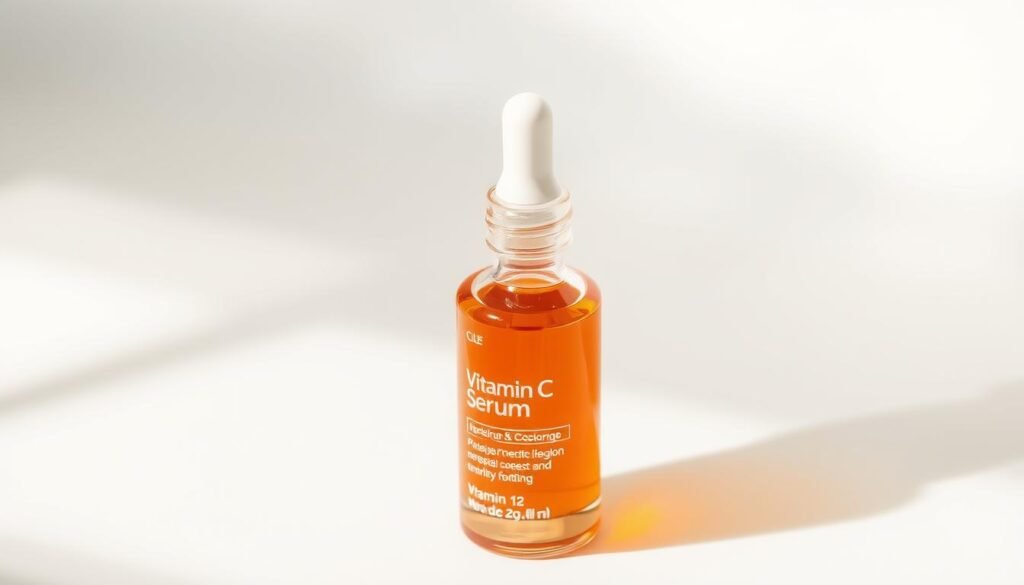
L-ascorbic acid is the best kind because it works well and helps your skin. But, it can spoil easily when it gets light, air, or heat. So, look for products in dark or air-tight containers, or ones that use special forms like magnesium ascorbyl phosphate.
These special forms turn into active vitamin C when they hit your skin. They’re gentler, making them great for those who want a natural option without irritation.
Appropriate concentrations and pH for efficacy
For L-ascorbic acid, the best amount is between 10% and 20%. If you’re new, start with 5–10% to get used to it. But, don’t go over 20% because it can cause more problems than benefits.
Also, check the pH level. Vitamin C works best at a pH of 3.5 or lower. If a product shows its pH, it’s easier to see how strong it is.
Complementary ingredients that boost performance
Vitamin E and ferulic acid help vitamin C work better. Hyaluronic acid keeps your skin moist, so the serum doesn’t dry it out. Peptides, niacinamide, and ceramides help with aging and fixing your skin’s barrier.
For a good example, look for products with sodium hyaluronate and vitamin E. They offer both moisture and protection. For more tips, check out this guide on natural skincare ingredients.
Formulation types by skin type and texture preferences
If you have sensitive skin, go for gentle forms like magnesium ascorbyl phosphate. Start with 5–10% and add soothing ingredients like centella asiatica. Choose fragrance-free products to avoid irritation.
For oily or acne-prone skin, use water-based or gel textures. Look for products without comedogenic ingredients. Adding vitamin C with salicylic acid or niacinamide can help with breakouts.
If you have mature or dry skin, you might prefer richer serums or oils. Use 15–20% vitamin C and add humectants like hyaluronic acid. Peptides can help with firmness and elasticity.
| Skin Type | Recommended Form | Concentration | Key Complementary Ingredients |
|---|---|---|---|
| Sensitive | Gel or lightweight serum with stable derivatives | 5–10% | Magnesium ascorbyl phosphate, centella asiatica, ceramides |
| Oily / Acne-prone | Water-based serum or gel | 10–15% | Niacinamide, salicylic acid, lightweight hyaluronic acid |
| Dry / Mature | Emollient serum or oil blend | 15–20% | Hyaluronic acid, glycerin, peptides, squalane |
| All-purpose / Beginner | Stable derivative or low-strength L-ascorbic acid | 5–10% | Vitamin E, hyaluronic acid, gentle botanicals |
How to use vitamin C serum in your daily routine
Begin with a simple plan to get the most from your vitamin C serum. A clear routine helps avoid irritation and boosts results. Here are practical steps for timing, layering, and mixing with other actives.
Optimal timing and application technique
Apply a skincare vitamin C serum in the morning to fight daytime damage. After cleansing, put 3–4 drops on slightly damp skin. Gently pat it on your face, neck, and décolletage, not rubbing.
Wait 60–90 seconds for it to absorb before adding more products. For sensitive skin, start by using it every other day. Or apply it over a hydrating toner to reduce irritation.
Morning pairing and sunscreen importance
Pair vitamin C with sunscreen for better sun protection. Vitamin C fights free radicals, but it’s not a sunscreen. Use a broad-spectrum SPF 30+ product after your serum in the morning.
Look for serums with vitamin E and ferulic acid in reviews. These combinations improve stability and daytime protection.
Managing interactions with retinoids and exfoliants
Many dermatologists recommend using vitamin C in the morning and retinoids at night. If you layer them, test your skin first. This helps you see how your skin reacts.
Avoid using strong AHAs or BHAs right after an acidic L-ascorbic serum. Modern formulas are less likely to cause issues with niacinamide. But, if you have reactive skin, space out your niacinamide and pure L-ascorbic acid use.
When reading vitamin C serum reviews, pay attention to user feedback on tolerance and mixing. This advice helps you adjust your routine without trial and error.
Evaluating results, side effects, and product reviews
You might see brighter skin in 2–4 weeks with regular use. Dark spots and uneven skin tone may take 8–12 weeks to improve. It can take 3–6 months for your skin to feel firmer and look smoother.
Expected timelines for visible improvements
Take photos every four weeks to track your progress. You’ll notice changes in glow, texture, and color over time. Look for reviews that show consistent improvements, not just quick fixes.
Common reactions and how to troubleshoot them
Mild tingling or warmth is normal with acidic serums. It usually goes away as your skin gets used to it. If you have redness, flaking, or discomfort, try using it less often or at a lower strength.
Breakouts might not be from the vitamin C itself. Check the ingredients for oils or emollients that could cause problems. If your serum turns yellow or brown, it’s past its prime and losing its power.
How to read reviews and assess value
Focus on reviews that talk about long-term results, especially for fading dark spots and firming. Also, watch out for mentions of packaging issues like discoloration or air exposure.
Compare the product’s strength and packaging to its price. A well-made, mid-priced serum with good packaging often beats a pricey one. Look for ingredients like vitamin C, hyaluronic acid, glycerin, and vitamin E for the best results.
| Aspect | What to expect | What to check in reviews |
|---|---|---|
| Early brightening | 2–4 weeks of consistent use | Users noting improved radiance within one month |
| Hyperpigmentation fading | 8–12 weeks for noticeable change | Long-term reports and before/after photos |
| Collagen-related benefits | 3–6 months for firmness and fine line reduction | Extended user timelines and clinical references |
| Adverse reactions | Mild tingling common; persistent irritation requires adjustment | Frequency of complaints about redness, flaking, or breakouts |
| Oxidation | Yellowing or browning indicates degradation | Reports of discoloration and short shelf life |
| Value | Balance concentration, active matrix, and packaging | Price per ounce comparisons and packaging notes |
For tips on skincare routines and advice from dermatologists, check out best skincare routines for women over 40. This can help you make informed choices about products and ingredients.
Conclusion
Vitamin C serum is key for most skincare routines. It offers free-radical protection, supports collagen, and brightens your skin. These benefits are best when the serum is stable, well-packaged, and used regularly.
Look for a serum that matches your skin type. You might prefer L‑ascorbic acid or magnesium ascorbyl phosphate. Choose a 10–20% concentration and add vitamin E, ferulic acid, or hyaluronic acid for extra benefits. If your skin is sensitive, start with lower concentrations and gentler forms.
Apply your serum every morning and follow with SPF 30+. Give your skin time to show results, which can take weeks or months. Always check the ingredients and reviews. Choose brands with air-tight, opaque packaging to keep the serum fresh. With the right choice and consistent use, vitamin C serum can make your skin brighter, firmer, and more even.
FAQ
What does vitamin C serum do for your skin?
Vitamin C is a strong antioxidant that fights off pollution and UV damage. It helps keep collagen, making your skin firm. It also brightens your skin by fading dark spots and hyperpigmentation.
When used regularly and with sunscreen, it can even out your skin tone over time.
Which form of vitamin C is best — L‑ascorbic acid or a derivative?
L‑ascorbic acid is the most effective but can irritate sensitive skin at high doses. Derivatives like magnesium ascorbyl phosphate are gentler and last longer. They still help with dark spots and are better for sensitive skin.
What concentration and pH should you look for?
Look for L‑ascorbic acid between 10–20% for beginners start at 5–10%. It needs an acidic pH, around 3.5 or lower, to work well. Concentrations above 20% may not be as effective and can cause irritation.
Which complementary ingredients improve a vitamin C serum’s performance?
Vitamin E and ferulic acid boost the antioxidant effect. Hyaluronic acid adds moisture and reduces dryness. Peptides, niacinamide, and ceramides help with anti-aging and barrier repair, as long as they’re compatible with the formula.
How should you choose a vitamin C serum based on your skin type?
For sensitive skin, choose gentle derivatives and lower concentrations. Avoid fragrances. Oily or acne-prone skin does well with water-based or gel textures. Mature or dry skin can use higher concentrations with hydrating agents.
When and how should you apply vitamin C serum?
Apply after cleansing to damp skin. Use 3–4 drops and press gently. Wait 60–90 seconds before adding other products. Morning use is best for daytime protection, but some use it at night too.
Can you use vitamin C with sunscreen and retinoids?
Yes. Vitamin C works well with sunscreen but doesn’t replace it. Always use broad-spectrum SPF 30+ in the morning. Use vitamin C in the morning and retinoids at night to avoid irritation. Be careful when layering and consider spacing actives.
How long until you see results from a vitamin C serum?
You might see brightening and reduced dullness in 2–4 weeks. Hyperpigmentation fades in 8–12 weeks. Improvements in firmness and fine lines take 3–6 months with regular use.
What normal reactions or side effects should you expect, and how do you troubleshoot problems?
Mild tingling or warmth is common and usually goes away. Persistent redness or discomfort means the concentration is too high. Reduce frequency or switch to a gentler form. Breakouts might be from other ingredients, not vitamin C.
Discard any serum that has changed color or smell, indicating oxidation.
How do you evaluate vitamin C serum reviews and assess value?
Look for long-term user feedback, especially for hyperpigmentation and anti-aging. Check for packaging issues. Compare the active ingredients, concentration, and price per ounce. Mid-priced serums with good packaging often outperform more expensive ones.
How should vitamin C serums be packaged and stored to preserve potency?
Choose opaque or airless bottles, amber glass, or sealed dispensers. Many formulas are stabilized with derivatives or vitamin E. Refrigeration can help preserve some products. Discard any serum that has changed color or smell.
Are there application tips to maximize absorption and minimize irritation?
Apply to damp skin for better absorption. Use small amounts and press gently. Wait about a minute before adding other products. Start with every other day if you have sensitive skin and consider using a hydrating toner or moisturizer as a buffer.
Can vitamin C fade post‑inflammatory hyperpigmentation?
Yes. Vitamin C reduces melanin production, helping to fade sunspots and hyperpigmentation. Derivatives like magnesium ascorbyl phosphate are gentler. You’ll see improvement in 8–12 weeks with regular use.
What ingredients should you avoid pairing immediately with L‑ascorbic acid?
Avoid strong chemical exfoliants right after using L‑ascorbic acid to prevent irritation. Niacinamide can work with vitamin C in many formulas, but sensitive skin may need to separate them. Always watch for signs of irritation when combining actives.
What makes a vitamin C serum worth the price?
Look for the active form, concentration, stabilizers, hydrating ingredients, and protective packaging. These factors affect how well it works and how long it lasts. A well-formulated, mid-priced serum in good packaging can offer great value compared to more expensive options.
