



Do you remember trying an oil that changed your skin routine? Maybe it was cold-pressed jojoba or argan oil that made your face soft overnight. Evening primrose oil offers a similar surprise. It comes from Oenothera biennis and is known for its skin and women’s health benefits.
It’s packed with linoleic acid, gamma-linolenic acid (GLA), vitamin E, and more. These compounds help keep your skin hydrated, reduce inflammation, and may ease menstrual symptoms. If you’re interested in evening primrose oil supplements or want to add it to your skincare routine, this article will help.
Before trying a new supplement, start with a small dose. Make sure to check the labels for third-party testing. If you need advice, talk to your healthcare provider. Also, review this disclaimer for safe use details.
Key Takeaways
- Evening primrose oil comes from Oenothera biennis and is rich in GLA and linoleic acid.
- The benefits of evening primrose oil include improved skin hydration and reduced inflammation.
- Evening primrose oil supplements are available in capsules; choose third-party tested brands.
- Start with a low dose, take with meals, and monitor your response over weeks.
- Consult a healthcare provider before use, especially if pregnant, breastfeeding, or on medications.
What is evening primrose oil and where it comes from
You might have seen evening primrose oil in health stores and skincare lines. It comes from the tiny seeds of Oenothera biennis. This plant has been used for skin and inflammation for a long time. The oil is loved for its fatty acids and antioxidants.
Botanical origins and traditional uses
The plant is from North and South America and also found in Europe and Asia. It’s known as sundrops and night willow-herb. Native American communities used it for skin issues.
This use has led to modern interest in evening primrose oil.
How the oil is made and what’s inside it
Producers get the oil from seeds, often by cold-pressing. This method keeps the fatty acids and vitamin E safe. A good oil has mostly linoleic acid and some gamma-linolenic acid.
Look for brands like Cliganic Organic and those with USDA Organic certification.
GLA explained and why it matters
GLA stands for gamma-linolenic acid, an omega-6 fatty acid. Our bodies turn it into DGLA and then prostaglandin E1. These help with inflammation, immune response, and menstrual health.
Our skin can’t make GLA well, so using evening primrose oil helps. It supports skin hydration and repair.
Benefits of evening primrose oil for skin health and beauty
Evening primrose oil does more than just hydrate the skin. Research shows it can make the skin more hydrated, firm, and elastic. Using GLA-rich oil for weeks can lead to better moisture retention and less skin fatigue.
When applied topically, evening primrose oil boosts these benefits. It can be used as a facial serum or mixed into moisturizers. This helps strengthen the skin barrier and reduce water loss. The oil’s antioxidants calm redness and protect cells from damage.
Improves skin hydration, elasticity, and barrier function
Studies have shown that regular use of evening primrose oil increases skin hydration and elasticity. You can use pure cold-pressed oil or products that combine it with vitamin E. This combination can enhance firmness and suppleness.
Support for eczema, atopic dermatitis, and acne
GLA in evening primrose oil may help those with atopic dermatitis. It can reduce dryness, inflammation, and improve skin health. Trials have shown positive results in using the oil for these conditions.
Research also suggests benefits for acne. GLA may help fight inflammation and improve skin health during treatments. While more studies are needed, topical evening primrose oil can be a gentle addition for acne-prone skin.
Topical uses and formulations
Evening primrose oil is great as a carrier oil in facial serums. It can also be used in body moisturizers to soften skin or in hair masks for scalp health. It’s often blended with essential oils like lavender or rosemary in cosmetics.
For home use, cold-pressed EPO is best. You can also find products that combine it with antioxidants and humectants for better results. For tips on cleansers and routines for sensitive skin, check out this guide to salicylic acid and dry skin.
| Use | Typical formulation | Primary benefit |
|---|---|---|
| Facial serum | Cold-pressed EPO + vitamin E | Hydration, elasticity, antioxidant protection |
| Body moisturizer | EPO blended with ceramides and glycerin | Reduced roughness and lower TEWL |
| Scalp mask | EPO with rosemary or tea tree oil | Scalp nourishment and stronger follicles |
| Bath soak | EPO mixed with colloidal oatmeal | Softens skin and soothes dryness |
Uses of evening primrose oil for hormonal balance and women’s health
Evening primrose oil might help with symptoms caused by hormonal changes. Studies show its gamma-linolenic acid (GLA) can turn into prostaglandin E1. This helps ease symptoms like breast swelling and inflammation.
PMS symptom management
If you get breast swelling, bloating, or acne during your period, evening primrose oil might help. Research shows it can reduce these symptoms. Many women feel better and can function better during their period.
Mastalgia and cyclic pain relief
Evening primrose oil can also help with breast pain. Studies show it can make pain less severe. It’s often used with vitamin E for a few months.
Menopause symptoms and hot flash management
Women with night sweats and hot flashes might try evening primrose oil. Some studies show it can help with these symptoms. Many people find it helpful, even if more research is needed.
Remember, the right dose of evening primrose oil varies. Always talk to your doctor before starting supplements, especially if you’re on medication.
Evening primrose oil supplements: choosing products and dosage guidance
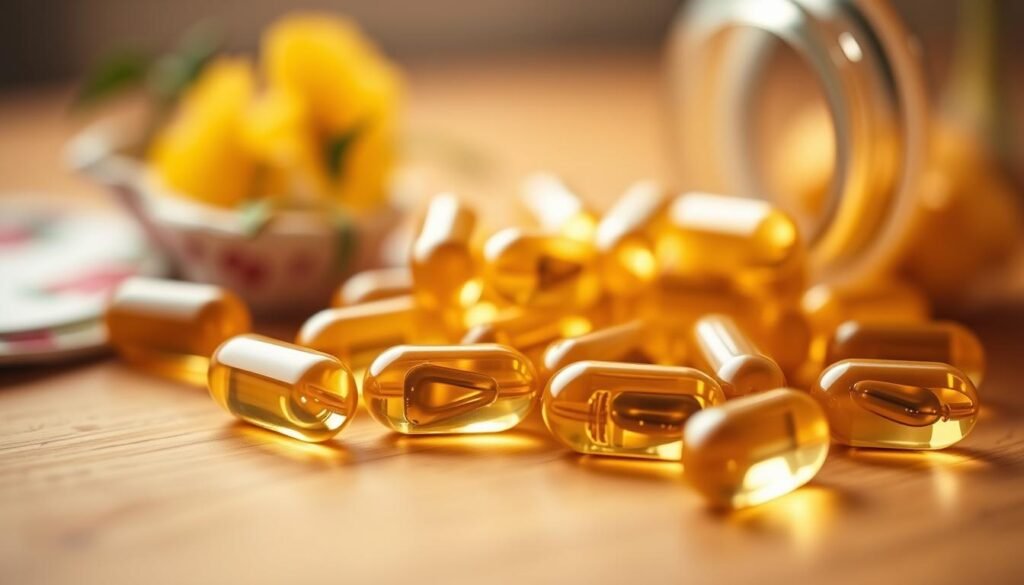
You can find evening primrose oil supplements in capsules, softgels, and liquid bottles. Labels should list the total oil per serving and the percentage of gamma-linolenic acid (GLA). Look for products with about 8–10% GLA and high linoleic acid content.
Choose third-party tested brands with clear quality markers. Look for a certificate of analysis (COA), USDA Organic when available, and cold-pressed extraction claims. Reputable manufacturers and pharmaceutical-grade suppliers tend to be more transparent about sourcing and testing.
Forms available and what to look for on labels
Capsules and softgels are the most convenient for daily use. Liquids suit topical blending or measured oral doses. Check for GLA percentage, total oil amount per capsule, and purity statements. If you plan topical use, a USDA Organic topical product such as Cliganic Organic may be a suitable reference for quality.
Typical doses used in studies and practical dosing tips
Research shows varied dosing. Some trials used 260–520 mg per day, while studies addressing PMS, mastalgia, or hot flashes often used about 500 mg daily. Start with a lower amount and raise it slowly to minimize stomach upset.
Take evening primrose oil supplements with meals to improve absorption. Track symptoms in a health diary and allow several weeks to months to judge benefit. For specific conditions, consult your clinician to tailor the evening primrose oil dosage to your needs.
Selecting the best evening primrose oil brand
Prioritize ingredient purity, transparent GLA labeling, and positive third-party testing. Check for reputable retail sources and pharmaceutical-grade suppliers when possible. User reviews can help, but verify claims with lab reports and COAs.
When comparing options, weigh organic certification, extraction method, and clear GLA percentages. This helps you choose the best evening primrose oil brand for your goals and ensures the supplement matches what you read on the label.
Potential risks, interactions, and evening primrose oil side effects
Before starting evening primrose oil, understand the common side effects and safety concerns. Most people find it safe, but some may experience mild issues. Since large-scale safety data are limited, it’s wise to approach with caution and knowledge.
Common mild side effects
Stomach upset, headaches, and changes in bowel movements are common side effects. Skin irritation can happen, especially if you have sensitive skin. Systematic reviews show mixed results for some benefits. If you notice new or worsening symptoms, stop using it and seek medical advice.
Drug interactions and contraindications
Evening primrose oil can affect blood clotting. If you’re on warfarin, clopidogrel, aspirin, or other anticoagulants, talk to your doctor. It may interact with certain psychiatric medications and some antiretrovirals, like lopinavir. Always get medical advice before combining products.
Use in pregnancy, breastfeeding, children, and older adults
The safety of evening primrose oil in pregnancy and breastfeeding is not fully understood. Most experts advise against using it unless a healthcare provider says it’s okay. Children and older adults should only use it under a doctor’s supervision because the risks are not well known.
Since the FDA doesn’t regulate supplements like prescription drugs, quality can vary. Look for brands that have third-party testing to ensure purity and potency. Always tell your healthcare team about any supplements you’re taking to avoid interactions with medications.
How to incorporate evening primrose oil into your routine for best results
Start by trying it out for a short time and set clear goals. Keep a health journal to track any changes in your skin, PMS, hot flashes, or breast pain. This will help you see if evening primrose oil is working for you.
Practical tips for supplementation and topical use
Start with a small dose and gradually increase it. Take capsules with meals to improve absorption and avoid stomach issues. It may take six to twelve weeks to see improvements in hormonal balance or skin.
For topical use, choose cold-pressed oil. Mix it with facial serums or moisturizers for a night routine. You can also add it to hair masks or baths for extra nourishment.
Complementary lifestyle and skincare habits
Eat a diet full of omega-3s, lean proteins, and antioxidants. Regular exercise and stress-reduction methods like yoga can also help.
Use sunscreen daily, gentle cleansers, and stay hydrated. These habits work well with evening primrose oil to improve skin health.
When to consult a healthcare provider
See your doctor before starting evening primrose oil if you’re pregnant, breastfeeding, or on certain medications. They can help with the right dosage for PMS, mastalgia, or menopause symptoms.
If you experience side effects or no improvement after a few months, talk to your doctor. Bring your journal to appointments to discuss your progress with evening primrose oil.
Conclusion
Evening primrose oil offers many benefits. It provides gamma-linolenic acid (GLA) and other nutrients. These support skin hydration, elasticity, and help with some inflammatory skin conditions.
Studies suggest it can ease eczema symptoms and help with acne. It also offers relief for PMS, mastalgia, and menopausal night sweats. But, it’s important to remember that results may vary.
You can use evening primrose oil in two ways: by mouth or on the skin. Its fatty acids, like linoleic acid and GLA, help with inflammation and skin health. Using it with good skincare and a healthy lifestyle can enhance its effects.
Start with a small dose of evening primrose oil and choose a tested product. Look for a brand that clearly states its GLA content and quality. Always be aware of how your body reacts and adjust as needed, especially if you’re on medication.
Incorporating evening primrose oil into your routine can be beneficial. Start with a trusted product, follow the recommended dose, and combine it with healthy habits. Always check with your doctor to ensure it’s safe and effective for you.
FAQ
What is evening primrose oil and where does it come from?
Evening primrose oil (EPO) comes from the seeds of Oenothera biennis. This plant is native to North and South America. It’s now grown worldwide. Native American communities used it for skin care. Today, EPO is cold-pressed to keep its fatty acids and antioxidants.
What’s inside evening primrose oil—what are its active components?
EPO is packed with linoleic acid (about 70–74%) and 8–10% gamma-linolenic acid (GLA). It also has tocopherols (vitamin E), phenolic acids, and triterpenes. These components give EPO its anti-inflammatory and antioxidant benefits for skin and hormonal health.
What is GLA and why does it matter?
Gamma-linolenic acid (GLA) is an omega-6 fatty acid. It turns into dihomo-gamma-linolenic acid (DGLA) and prostaglandin E1 in the body. These help control inflammation and menstrual cycles, benefiting skin and hormone-related symptoms.
How can EPO help my skin?
Studies show EPO improves skin hydration, elasticity, and firmness. Its GLA and antioxidants reduce inflammation and water loss. This leads to smoother, more resilient skin over time.
Can evening primrose oil help eczema, atopic dermatitis, or acne?
Research suggests EPO’s GLA may help atopic dermatitis by reducing dryness and inflammation. It may also benefit acne and lessen isotretinoin side effects. Always use EPO with medical care for severe conditions.
How should I use EPO topically?
Use cold-pressed EPO in facial serums, treatments, moisturizers, and hair masks. Mix it with gentle lotions or essential oils. Always patch-test before using on your face. Apply nightly or as directed.
Can EPO reduce PMS symptoms?
Studies and data suggest EPO may lessen PMS symptoms like breast swelling and irritability. This is likely due to GLA’s effects. Daily doses of 260–520 mg are common, but results vary.
Is EPO effective for mastalgia (cyclical breast pain)?
Research shows EPO, sometimes with vitamin E, can reduce breast pain. Benefits may take months. Results vary, so consult a doctor for advice.
Can EPO help with menopause hot flashes?
Some studies found EPO can reduce hot flash frequency and severity. Evidence is promising but not conclusive. It’s often used as a nonhormonal option; monitor symptoms and consult a healthcare provider.
What forms of EPO supplements are available and what should I look for on labels?
EPO is available as softgels, capsules, and liquid oils. Look for cold-pressed extraction and stated percentages of linoleic acid and GLA. Choose products with third-party testing, a COA, and organic certification. Clear labeling ensures potency and purity.
What doses of evening primrose oil have studies used?
Doses vary in studies. For hormonal and skin issues, 260–520 mg/day is common. For menopausal or mastalgia symptoms, doses around 500 mg/day are used. Start low and gradually increase under medical guidance. Allow several weeks to months to see effects.
How do I take EPO to reduce side effects and improve absorption?
Take oral EPO with meals to improve absorption and reduce stomach upset. Begin with a low dose and gradually increase. Keep a symptom journal to track changes over time.
How do I choose the best evening primrose oil brand?
Look for brands with third-party testing, transparent sourcing, and cold-pressed, high-GLA products. Check for a COA, USDA Organic certification, and clear GLA labeling. Read verified user reviews and choose reputable manufacturers and retailers.
What are common side effects of evening primrose oil?
EPO is generally well-tolerated. Mild side effects include stomach upset, headaches, and bowel changes. Serious adverse events are rare but monitor for unusual bleeding or persistent symptoms.
Are there drug interactions or contraindications I should know about?
EPO may increase bleeding risk with anticoagulants or antiplatelet drugs. It has cautions with some antipsychotics and potential interactions with certain antiretrovirals. Avoid starting EPO without clinician approval if you use blood thinners, antipsychotics, antiretrovirals, or have a bleeding disorder.
Is EPO safe during pregnancy, breastfeeding, for children, or older adults?
Safety data are limited. Most guidance advises avoiding EPO during pregnancy and breastfeeding unless a healthcare provider advises otherwise. Children and older adults should use EPO only under medical supervision due to sparse safety evidence in these groups.
Can I combine oral and topical EPO for better results?
Combining oral and topical EPO may offer complementary benefits. Oral GLA supports systemic fatty-acid status, while topical oil improves skin hydration and barrier function. Use both cautiously and monitor outcomes and any skin reactions.
How long until I see results from EPO for skin or hormonal issues?
Expect gradual changes. Skin hydration and elasticity may improve over weeks to months. Hormonal symptoms like PMS, mastalgia, or hot flashes often require several weeks of consistent use before benefits appear. Track progress in a journal and discuss results with your clinician.
What practical tips help maximize EPO’s effectiveness?
Start with a reputable, third-party–tested product and a conservative dose. Take capsules with food, be patient (allow weeks to months), and pair EPO with a balanced diet rich in essential fatty acids, regular exercise, stress management, sunscreen, gentle skincare, and adequate hydration.
When should I consult a healthcare provider about using EPO?
Talk to a clinician before starting EPO if you are pregnant, breastfeeding, taking blood thinners, antipsychotics, antiretrovirals, or have a bleeding disorder. Also consult for tailored dosing for PMS, mastalgia, eczema, or menopausal symptoms, or if you experience persistent side effects.
How should I track measurable outcomes if I use EPO therapeutically?
Use condition-specific measures: an EASI score or body-surface tracking for eczema, lesion counts for acne, a hot-flash diary, or a breast-pain severity scale for mastalgia. Record baseline measures, track changes weekly, and review results with your healthcare provider to guide continued use.
