


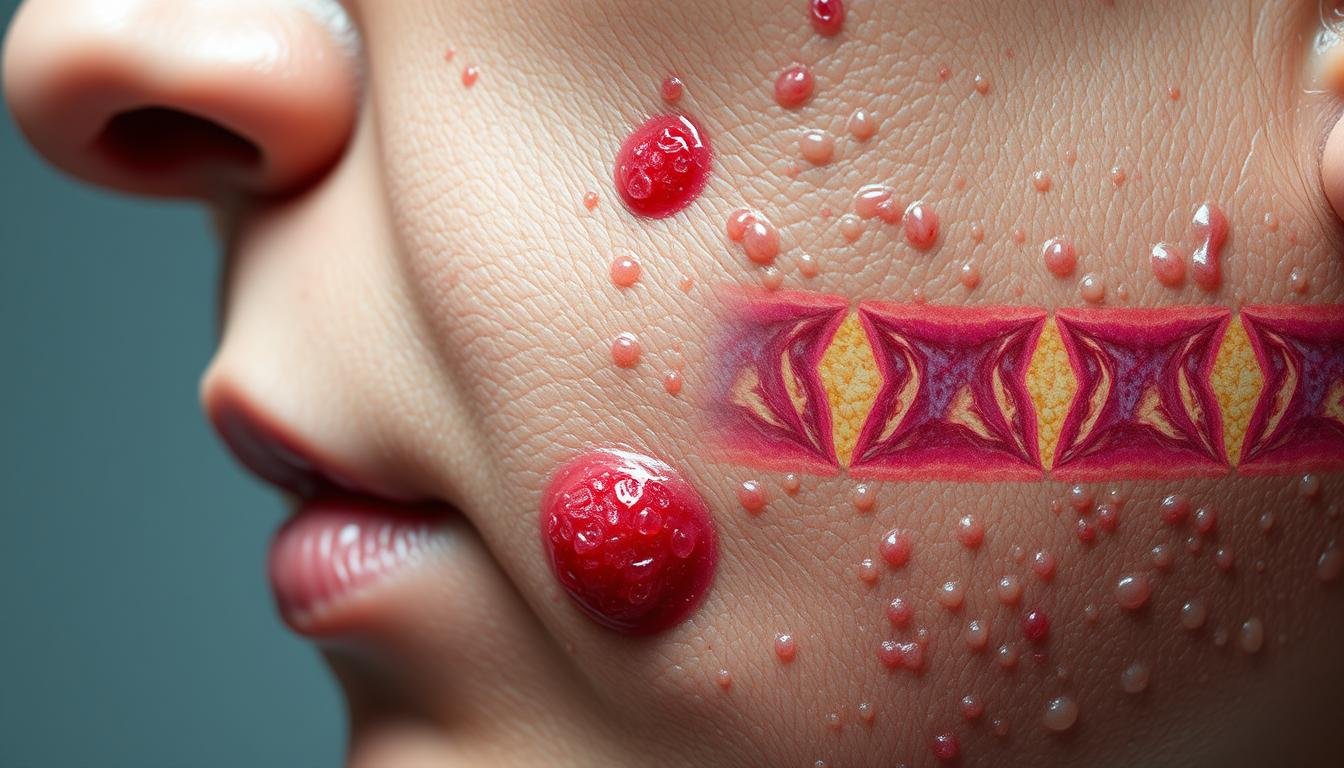
You wake up and see a new pimple on your forehead before a big meeting. This small problem is how many people in the United States first notice acne. They start looking for answers to understand what causes it.
Acne happens when hair follicles get blocked by too much sebum and dead skin cells. This leads to different kinds of pimples. These pimples often show up on the face, chest, and back because these areas have more sebaceous glands.
This article will explain acne causes in a simple way. You’ll learn how to tackle breakouts early. From using over-the-counter treatments to getting help from a dermatologist, we’ll cover it all. We’ll talk about the biology, common triggers, lifestyle factors, types of pimples, and when to see a professional.
Key Takeaways
- Acne is caused by plugged hair follicles, excess sebum, and inflammation.
- Most breakouts occur where sebaceous glands are densest: face, chest, and back.
- Identifying acne triggers — hormones, diet, stress, and skincare — helps you act early.
- Effective options range from OTC topicals to prescription and dermatologist-managed therapies.
- Early intervention lowers the risk of scarring and long-term pigmentation.
Understanding acne causes: how acne develops beneath your skin
Your skin has a complex system of hair follicles and sebaceous glands. These glands make sebum, an oily substance that keeps your skin and hair moist. When everything works right, your skin stays healthy.
But, when sebum production goes up and mixes with dead skin cells, problems start. This mix can block a hair follicle, leading to a whitehead. If it gets air, it turns into a blackhead. Deeper blockages can cause bigger problems like papules, pustules, nodules, or cysts.
Bacteria like Cutibacterium acnes can live in these blocked follicles. They can cause inflammation, leading to redness and pain. If a follicle bursts under the skin, it can create big, painful lumps that take time to heal.
The main reasons for these issues are too much sebum, blocked follicles, bacteria, and inflammation. These factors explain why acne often shows up on oily areas like the face, chest, and back.
Cleansing too hard can make things worse by stripping away protective oils. Starting treatment early can help avoid scarring and lasting skin color changes.
| Mechanism | What Happens | Visible Result |
|---|---|---|
| Excess sebum | Sebaceous glands produce more oil than needed | Oily skin, increased risk of clogged follicles |
| Follicle plugging | Oil mixes with dead cells and forms a plug | Whiteheads, blackheads, deeper plugs |
| Bacterial colonization | Cutibacterium acnes multiplies inside blocked follicles | Inflamed, painful bumps and pustules |
| Inflammation | Immune response to bacteria and ruptured follicles | Redness, swelling, nodules, possible scarring |
Hormonal imbalance and genetics as acne triggers

Acne often follows patterns you can track. A hormonal imbalance changes how your skin works. Genetics and family history affect how your skin reacts to these changes.
Knowing when and why your acne flares helps you and your doctor find the right treatment.
Androgens, puberty, and adult female flare patterns
Androgens like testosterone rise during puberty in both boys and girls. This rise makes sebaceous glands bigger and sebum production higher. This is a big reason for puberty acne.
In adult women, acne often gets worse in the week before their period. Pregnancy, perimenopause, and conditions like polycystic ovary syndrome can also change when and how bad acne gets. If you notice patterns, treatments that target hormones might help.
Family history and inherited risk
Acne often runs in families. If your parents had bad acne, you might get it too. Genetics affect how much sebum you make, how big your follicles are, and how your skin reacts to inflammation.
Telling your doctor about your family’s acne history helps them find the right treatment for you. They can tailor treatments to your specific needs, not just use one for everyone.
Medications and medical conditions that mimic hormonal acne
Some medicines can cause acne-like problems. Corticosteroids, testosterone therapy, anabolic-androgenic steroids, lithium, and some antiepileptic drugs are known to trigger it. Always tell your doctor about any medicines or supplements you’re taking.
Sudden, severe acne in adults might mean there’s an underlying health issue. A doctor will check for endocrine disorders or drug-induced causes. They might suggest combined oral contraceptives or anti-androgens, or refer you for specialist tests.
If you’re interested in nonprescription hormone support and lifestyle changes to help with acne, check out balance hormones naturally.
Diet, lifestyle, and external acne triggers
What you eat and how you live can shape your skin. Eating a balanced diet that avoids high-glycemic foods may help. Choose snacks and meals with a low glycemic index to avoid insulin spikes and oil production.
Dietary patterns linked to breakouts
Research shows high-glycemic diets can lead to more acne in some. Dairy might cause issues for a few people. But, chocolate and greasy food rarely cause acne.
Try eating foods with a lower GI, like oats, legumes, and whole fruit. See if your skin improves.
Stress, sleep, and their influence on existing acne
Stress doesn’t cause acne but can make it worse. Poor sleep makes stress and inflammation worse, making acne harder to control. Simple steps like consistent sleep, breathing exercises, or short walks can help.
Skincare routine, cosmetics, and external factors
Your skincare routine should be gentle and consistent. Avoid harsh scrubs and strong soaps that strip your skin. Use non-comedogenic products and remove makeup every night.
Heavy oils and thick creams can clog pores and cause breakouts. Be careful where you apply them.
Smoking, sun exposure, and other lifestyle contributors
Smoking can lead to different acne patterns in adults and slow healing. Sun exposure and tanning don’t reliably clear acne and can make your skin more sensitive to certain treatments. Mechanical friction from phone use, helmets, or tight collars can also cause acne mechanica.
Test suspected acne triggers by making controlled changes. Reduce high-GI foods, simplify your skincare routine, improve sleep, and cut back on smoking. Track your results for a few weeks and talk to a clinician if issues persist.
Inflammation, types of acne lesions, and complications
Acne is not just one problem. It shows up in many forms, each telling a story of what’s happening under your skin. Knowing these signs helps you pick the right treatment and know when to see a dermatologist.
Different lesion types and what they indicate
Whiteheads and blackheads are comedones. They happen when a hair and sebum block a follicle. You can often treat them with over-the-counter cleansers and topical retinoids.
Papules are small, tender red bumps without pus. Pustules look similar but have visible pus. Both show local inflammation and bacterial activity.
Nodules are large, solid, painful lumps deep under the skin. Cysts are soft, pus-filled, and very painful. Cystic acne is the worst form and usually needs prescription treatment to avoid lasting damage.
Inflammatory processes that lead to scarring and pigmentation changes
Bacteria like Cutibacterium acnes and your immune response cause inflammation. This can weaken follicle walls and lead to rupture.
When follicles rupture, deeper tissue damage can cause atrophic pits or raised hypertrophic and keloid scars. The risk of scarring goes up with repeated inflammation and delayed treatment.
Post-inflammatory hyperpigmentation shows as dark spots after lesions heal. People with darker skin tones may see this more often. Lighter patches can happen too.
When to seek professional care
If over-the-counter treatments don’t work, or if you have nodules, cysts, or visible scarring, talk to your doctor or a dermatologist. Go to urgent care for sudden severe adult-onset acne or signs of an allergic reaction like facial swelling or trouble breathing.
A dermatologist can offer oral antibiotics, hormonal therapies, isotretinoin, and office procedures for scarring. They can also help with the emotional side of acne, like anxiety or depression, so you get support for your skin and mind.
| Lesion type | Appearance | Likely treatment |
|---|---|---|
| Whitehead (closed comedone) | Small, flesh-colored bump | Topical salicylic acid or retinoids |
| Blackhead (open comedone) | Dark-tipped pore without inflammation | Topical exfoliants and retinoids |
| Papule | Small, red, tender bump | Topical antimicrobials or retinoids |
| Pustule | Red bump with pus | Topical antibiotics or benzoyl peroxide |
| Nodule | Large, hard, painful lump under skin | Oral antibiotics, steroid injection, dermatologist care |
| Cyst (cystic acne) | Deep, soft, pus-filled and painful | Oral isotretinoin, drainage by dermatologist, referral |
| Post-inflammatory hyperpigmentation | Dark patches after healing | Topical lightening agents, chemical peels, laser |
| Scarring (atrophic or hypertrophic) | Pitted or raised permanent marks | Microneedling, fillers, laser resurfacing, surgical options |
Conclusion
Acne has many causes, including too much sebum, blocked pores, bacteria, and inflammation. Things like hormonal changes, genetics, diet, stress, and bad skincare can make acne worse.
Understanding your acne types and how inflamed they are is key. This helps you see if you might scar or get dark spots. Paying attention to patterns early on is crucial. This way, you and your doctor can find the best treatment.
Small changes in your diet and sleep can help a lot. Also, using gentle, non-clogging skincare can cut down on breakouts. If your acne doesn’t get better or is really bad, see a doctor. They can give you treatments that really work.
FAQ
What causes acne and where does it most commonly appear?
Acne happens when hair follicles get clogged by too much sebum and dead skin cells. Sebaceous glands produce sebum to keep skin moist. When there’s too much, it can block follicles.
Whiteheads form from closed plugs, while blackheads are open plugs that darken. Deeper blockages can lead to papules, pustules, nodules, or cysts. These usually appear on the face, forehead, chest, upper back, and shoulders.
How do bacteria and inflammation contribute to breakouts?
Bacteria like Cutibacterium acnes can grow in plugged follicles. This growth triggers an immune response and inflammation. Inflammation causes red, tender bumps and can lead to deeper cystic lesions.
These processes also increase the risk of scarring and post-inflammatory hyperpigmentation.
What are the four primary biological mechanisms behind acne?
The main causes are excess sebum, follicular plugging, bacterial involvement, and inflammation. These factors explain why acne often appears where sebaceous glands are most dense.
How do hormones, especially androgens, influence acne?
Hormones like testosterone increase during puberty and stimulate sebaceous glands. This surge is a key reason for teenage acne. In adult women, hormonal changes can lead to persistent or cyclical acne.
Does family history affect my acne risk?
Yes. Genetics play a big role. If your parents had acne, especially adult acne, you’re more likely to get it. Genetics affect sebum production, follicle behavior, and inflammation.
Can medications or medical conditions cause acne-like eruptions?
Some medications can cause or worsen acne-like symptoms. This includes corticosteroids, anabolic-androgenic steroids, testosterone, lithium, and some antiepileptic drugs. Sudden severe acne in adults may signal an underlying health issue.
Does diet affect acne?
Diet can impact acne for some. High-glycemic-index diets and foods like white bread and chips can worsen acne. Chocolate and greasy foods may not be as big of a factor for most.
If diet seems to trigger your acne, try changing to lower-GI foods and see if it helps. Discuss your findings with your doctor.
How do stress and sleep impact acne?
Stress doesn’t cause acne but can make it worse. It affects hormones and inflammation. Poor sleep increases stress and inflammation, which can worsen breakouts.
Managing stress and getting good sleep can help reduce acne flares.
Can my skincare routine or cosmetics make acne worse?
Acne isn’t caused by dirt. Harsh cleansers or excessive scrubbing can irritate the skin and make acne worse. Use gentle cleansers and non-comedogenic cosmetics.
Remove makeup every night. Some skincare and haircare products can also trigger acne where they touch the skin.
What is acne mechanica and which external factors matter?
Acne mechanica is caused by friction, pressure, or heat on follicles. Common causes include helmets, tight collars, backpacks, and frequent phone use. Repeated irritation can lead to or worsen breakouts.
Do smoking and sun exposure affect acne?
Smoking may worsen acne in older adults and harm skin health. Sun exposure or tanning doesn’t reliably improve acne and can be harmful. Some acne treatments increase photosensitivity.
Protect your skin and follow sun guidelines for treatments.
What are the different types of acne lesions and what do they indicate?
Common lesions include whiteheads, blackheads, papules, pustules, nodules, and cysts. Nodules and cysts indicate deeper inflammation and carry a high risk for scarring.
How does inflammation lead to scarring and pigment changes?
Inflammation and follicular rupture can damage surrounding tissue. This damage can produce pitted or raised scars. Post-inflammatory hyperpigmentation or hypopigmentation can occur as the skin heals, especially in darker skin tones.
When should you seek professional care for acne?
Seek care if over-the-counter treatments fail, acne is severe, scarring occurs, or it causes emotional distress. Also, consult if acne starts suddenly in adulthood or if medication effects are concerning. Dermatologists can offer various treatments, including prescription medications and procedures for scarring.
What practical first steps should I take to manage acne at home?
Start with a gentle skincare routine: use a mild cleanser twice daily, targeted topical agents, and daily sunscreen. Avoid harsh scrubs and excessive cleansing. Consider dietary changes to lower-GI foods if you notice a pattern.
Manage stress, get good sleep, and track products or behaviors that trigger flares.
Are hormone-directed treatments appropriate for everyone with acne?
Hormone-directed treatments are helpful when acne is linked to menstrual cycles, androgen excess, or family history. These options are often considered for adult female-pattern acne. Always consult a clinician for assessment and monitoring.
How long does it take for acne treatments to show improvement?
Topical treatments and lifestyle changes may take 6–12 weeks to show improvement. Oral antibiotics may work faster but are usually used short-term. Isotretinoin can lead to significant, lasting improvement but requires dermatologist monitoring.
Be patient and consistent; if you see no improvement after a suitable trial, return to your doctor.
Can early treatment prevent long-term scarring and pigment changes?
Yes. Early, evidence-based treatment can lower the risk of permanent scarring and pigment changes. Treating inflammatory lesions promptly and avoiding picking or squeezing pimples reduces tissue damage.
If scarring or persistent pigmentation occurs, dermatologic procedures can help. Prevention is easier and more effective than later correction.
