

Hair is one of the most defining features of human appearance, yet its journey from a microscopic structure beneath the skin to long, flowing strands is nothing short of a biological marvel. Every strand that sways, curls, or shines on your head begins as a tiny root inside a follicle, buried in the skin’s layers. Understanding the full picture of how hair grows and what can go wrong along the way is essential for anyone looking to support healthy growth, manage hair loss, or simply take better care of their strands.
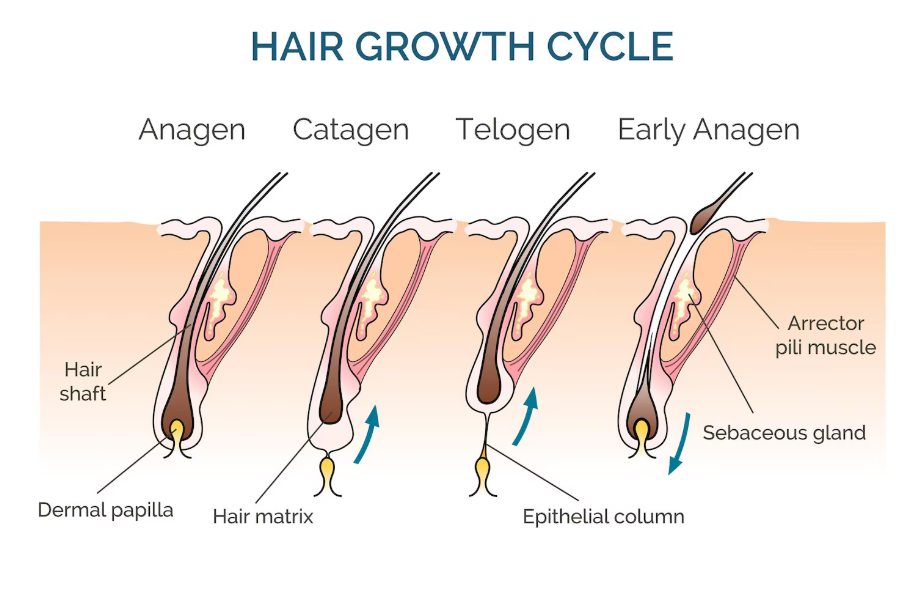
Hair begins its life in the hair follicle, a small but incredibly intricate organ located in the dermal layer of the skin. Each follicle contains a root, known as the hair bulb, which houses actively dividing cells. These cells are fueled by the dermal papilla, a cluster of blood vessels that deliver vital oxygen and nutrients. Right above the bulb is the hair matrix, a region responsible for producing the cells that become the hair shaft. As these cells multiply, they push older cells upward, where they harden and die, forming the visible strand of hair that exits through the skin.
Each follicle is also equipped with a sebaceous gland that produces sebum, or oil, to keep the hair moisturized and flexible. Tiny muscles called arrector pili, responsible for “goosebumps,” connect to the follicles and contract in response to cold or emotional triggers. The design of the follicle even determines hair characteristics; its shape, angle, and diameter directly influence whether your hair grows straight, wavy, or curly.
Hair growth is not a continuous process but rather a repeating cycle consisting of several stages. The most important is the anagen phase, where active growth occurs. This stage can last between two to seven years, depending on genetics, and determines how long your hair can grow. On average, 85 to 90 percent of the hairs on your scalp are in this phase at any given time.
Following anagen is the catagen phase, a brief two-to-three-week period where growth stops and the hair detaches from the blood supply. This is a transitional phase, setting the stage for the telogen phase. Telogen lasts around two to four months, during which the hair rests and eventually falls out. A lesser-known but crucial final stage is exogen, where the old hair is shed, and a new one begins to grow in its place.
This cycle is vital to maintaining healthy hair. However, if the cycle is disrupted, whether by stress, illness, or hormone imbalance, more hairs may prematurely enter telogen, resulting in noticeable shedding or thinning.
Several internal and external factors influence how efficiently your hair progresses through this cycle. Nutrition is among the most critical. Hair cells are the second-fastest growing cells in the human body, and they need constant fuel. Protein forms the structural base of hair, while vitamins like biotin, vitamin D, and vitamin E support follicle function and reduce inflammation. Iron and zinc are also essential for cellular turnover and follicle repair.
Hormonal fluctuations can either stimulate or hinder growth. For instance, androgens such as testosterone and DHT (dihydrotestosterone) can shrink hair follicles in genetically susceptible individuals, leading to pattern baldness. Estrogen, on the other hand, helps keep hair in the anagen phase longer, which is why many women experience thicker hair during pregnancy and increased shedding postpartum.
Your lifestyle also plays a major role. Chronic stress can push follicles into telogen phase prematurely, a condition known as telogen effluvium. Poor sleep, smoking, dehydration, and nutrient-poor diets can all degrade follicle health. Even medications for blood pressure, acne, depression, or hormonal birth control can have hair growth side effects.
Environmental exposures such as pollution, hard water, and ultraviolet radiation also compromise hair integrity, while improper hair care like overwashing, tight hairstyles, or frequent heat styling can cause breakage and strain the scalp.
When hair growth becomes noticeably disrupted, understanding the root cause is the first step to recovery. Hair loss comes in many forms. Androgenetic alopecia, the most common, affects both men and women and is largely genetic. Alopecia areata, an autoimmune disorder, causes sudden, patchy loss. Telogen effluvium can be triggered by stress, surgery, or illness and usually resolves within months. Trichotillomania is a behavioral condition where individuals compulsively pull out their hair.
Scalp health issues like psoriasis, dandruff, or seborrheic dermatitis can also impact follicle function. The inflammation and buildup associated with these conditions can clog pores and restrict nutrient delivery. Additionally, traction alopecia, a form of hair loss from repeated tension, can become permanent if the follicle is damaged beyond repair.
Fortunately, there are many effective strategies to support and even revive healthy hair growth. Start with your diet. Include high-quality protein sources, leafy greens, nuts, seeds, and healthy fats. Omega-3s from salmon or flaxseeds help hydrate the scalp and reduce inflammation. Zinc and iron from beans, lentils, and red meat support follicle function, while biotin-rich foods like eggs and sweet potatoes can strengthen hair structure.
Scalp care should not be overlooked. Regular gentle massage increases blood flow, delivering nutrients directly to the roots. Natural oils, such as rosemary and peppermint oil, have shown promise in clinical studies for stimulating growth. Keeping the scalp clean without stripping natural oils is vital. Use sulfate-free shampoos and avoid buildup from heavy conditioners or styling products.
Protective styling habits can prevent breakage and stress. Minimize heat styling, avoid tight ponytails or braids, and never brush wet hair aggressively. Use silk pillowcases to reduce friction, and apply a leave-in conditioner or lightweight oil to seal in moisture.
In addition to lifestyle changes, targeted treatments can help in more severe cases. Topical minoxidil is FDA-approved for both men and women and helps prolong the anagen phase. Platelet-rich plasma (PRP) therapy, microneedling, and low-level laser therapy are emerging options with promising results. For hormonal-related hair loss, medications like finasteride or spironolactone may be prescribed.
Looking ahead, the field of hair restoration is advancing rapidly. Scientists are studying stem cells within dormant follicles that could be reactivated to promote new growth. Hair cloning and follicle engineering aim to create new, lab-grown follicles that can be implanted into the scalp. Genetic testing is also being used to create personalized treatment plans based on an individual’s DNA profile and sensitivity to DHT.
Ultimately, growing thick, healthy hair is not about quick fixes—it’s a long-term commitment to caring for your scalp, nourishing your body, and protecting your strands. By understanding how hair grows and what it needs to thrive, you empower yourself with the tools to support consistent, sustainable growth.
FAQs
- What causes hair to grow faster or slower?
Hair growth rate is influenced by genetics, hormones, diet, age, and overall health. Stress and illness can slow it down, while a nutrient-rich lifestyle can support faster growth. - How long does it take to see new hair growth?
New growth usually becomes visible after 3 to 6 months of consistent care or treatment, depending on the cause of hair loss. - Can you wake up dormant hair follicles?
Sometimes. With the right treatment (like minoxidil, PRP, or microneedling), follicles in a resting or dormant state can be reactivated. - What are signs of unhealthy hair follicles?
Excessive shedding, thinning, inflammation, dandruff, or scalp sensitivity may indicate poor follicle health. - Is it possible to regrow hair naturally without medication?
Yes, if the hair follicles are still alive. Proper nutrition, scalp care, and lifestyle changes can support natural regrowth. - How often should I massage my scalp for hair growth?
Aim for 5 to 10 minutes daily using fingers or a scalp massager. Combine with essential oils for best results. - Does cutting your hair make it grow faster?
No, but regular trims help prevent split ends and breakage, which keeps your hair looking healthy as it grows. - What’s the difference between shedding and breakage?
Shedding is the natural release of hair from the follicle. Breakage is when hair snaps along the shaft due to damage. - How do age and menopause affect hair growth?
Hormonal changes reduce estrogen and increase androgen sensitivity, leading to thinning, shorter growth phases, and dryness. - Are hair growth oils and serums actually effective?
Some are, especially those containing rosemary oil, peppermint oil, or proven ingredients like minoxidil. Results vary by person and product.
