



You find an old bar of soap in the back of your cabinet. It smells fresh, like pine and medicine. This scent is from tea tree oil, a natural extract from Melaleuca alternifolia. It’s been trusted for years to fight skin problems and clean homes.
The Bundjalung people of Australia used tea tree oil for wounds and breathing issues. It entered Western medicine in the early 1900s. Now, it’s in skincare, haircare, and cleaners. It helps with acne and cleaning.
Tea tree oil works because of its chemistry. It has compounds like terpinen-4-ol that fight bacteria and reduce inflammation. When used right, it can help with skin issues and minor wounds.
This article will show you how tea tree oil can help your health and home. We’ll talk about safe uses and how to use it without problems.
Key Takeaways
- Tea tree oil benefits come from compounds like terpinen-4-ol.
- Historical use by the Bundjalung people informed modern applications.
- Common tea tree uses include skin, hair, nails, and household cleaning.
- Proper dilution is important to avoid irritation and maximize safety.
- This guide explains practical, evidence-based uses and precautions.
What is Tea Tree Oil and How It Works
Tea tree oil comes from the leaves of Melaleuca alternifolia, a tree found in Australia. It’s not the same as true tea, which comes from Camellia sinensis. Both traditional use and modern studies show it has strong antiseptic properties.
The oil is packed with terpinen-4-ol and other compounds like 1,8-cineole. Terpinen-4-ol is key for its antiseptic and anti-inflammatory effects. When used correctly, it can kill bacteria, fungi, and some viruses on the skin and surfaces.
It also reduces redness and swelling, helping wounds heal faster. This is why it’s often used in products for blemishes and minor skin issues.
Chemical composition and mechanisms
Terpinen-4-ol is the main part that fights off microbes. Other terpenes work together to make it even more effective. When applied to the skin, it attacks the cell membranes of microbes, causing them to die.
It also has anti-inflammatory effects, which help with skin issues. Using it at the right concentration can be beneficial for the face. But, using it undiluted can cause irritation.
Forms and concentrations you’ll encounter
You’ll find tea tree oil in different strengths, from 100% essential oil to diluted versions. It’s available in essential oil, shampoos, soaps, gels, cleansers, ointments, and cleaners for the home.
It’s important to use it safely. Dilute it with a carrier oil or choose a product that’s already been formulated. For the face, use a lower concentration to avoid irritation. For the scalp or cleaning, products may have a higher concentration.
Always check the label and choose the right concentration for your needs. For more on natural skincare after 40, check out this guide: natural skincare ingredients over 40. It helps you use tea tree oil effectively with other skincare products.
| Form | Typical Concentration | Common Uses | Safety Note |
|---|---|---|---|
| Pure essential oil | 100% | DIY blends, dilution into carriers | High risk of irritation if used neat |
| Spot treatment serums | 5–10% | Acne targets, tea tree benefits for face | Patch-test before facial use |
| Shampoos and cleansers | 1–5% (in finished product) | Scalp care, dandruff control | Formulations balance efficacy and gentleness |
| Ointments and gels | 2–15% | Minor wounds, antiseptic skin support | Follow product directions for frequency |
| Household cleaners | Variable blends | Surface disinfection, mold reduction | Avoid ingestion and keep away from pets |
tea tree benefits for skin: acne, wounds, and inflammation
Tea tree oil can help with common skin issues. It fights acne-causing bacteria and reduces inflammation. Always dilute it properly and do a patch test to avoid skin irritation.
Acne management with tea tree oil
Tea tree oil can help with mild to moderate acne. It reduces bacteria and lessens the size of acne lesions. Mix one part tea tree oil with nine parts water for a 10% solution.
Apply it with a cotton swab once or twice a day. You can also find tea tree gels and cleansers online or in natural stores for easy use.
Minor cuts, scrapes, and wound support
Tea tree oil fights off harmful bacteria in minor cuts. Clean the area with soap and water first. Then, mix one drop of tea tree oil with one teaspoon of coconut oil.
Apply it sparingly and cover with a bandage. Repeat this process once or twice a day until a scab forms. Studies suggest tea tree oil can help wounds heal faster, but more research is needed.
Soothing inflamed or irritated skin
Tea tree oil has anti-inflammatory properties that reduce swelling and redness. It can help with skin irritation and even eyelid mite conditions. For sensitive areas, mix it with olive, almond, or coconut oil.
Always avoid getting it in your eyes. Before using it widely, do a patch test. Stop if you get contact dermatitis. If you have deep wounds or severe inflammation, see a doctor.
Tea tree benefits for hair and scalp: dandruff, lice, and salon care
Looking for a simple way to soothe scalp itch and cut down on flaking? Tea tree oil is a natural antifungal that fights Malassezia and Candida, common causes of dandruff. Just add a few drops of tea tree oil to your shampoo to see a difference.
Managing dandruff and scalp yeast
Studies show tea tree oil can control fungal growth and reduce inflammation on the scalp. Use a shampoo with tea tree oil or mix a few drops with your shampoo. Let it sit for a minute or two before rinsing to maximize its effects.
Deterring and treating lice
Research indicates tea tree oil can combat head and body lice, even resistant strains. You can buy products with tea tree oil or mix it with coconut oil for direct application. Be careful when using it on kids and stop if irritation occurs. If lice keep coming back, see a doctor.
Scalp health and hair-care tips
Tea tree oil does more than fight pests and flakes. It also reduces itch and promotes a healthy scalp microbiome. For a weekly scalp treatment, mix 2–4 drops of tea tree oil with a carrier oil like coconut or olive oil. Massage it in gently. Don’t apply undiluted oil to sensitive skin and talk to a dermatologist for serious hair loss or sores.
Pair tea tree oil with gentle hair care like sulfate-free shampoos and avoiding hot water. For your face, learn about facial gua sha techniques to enhance your grooming routine.
Tea tree benefits for nails, fungal infections, and athlete’s foot
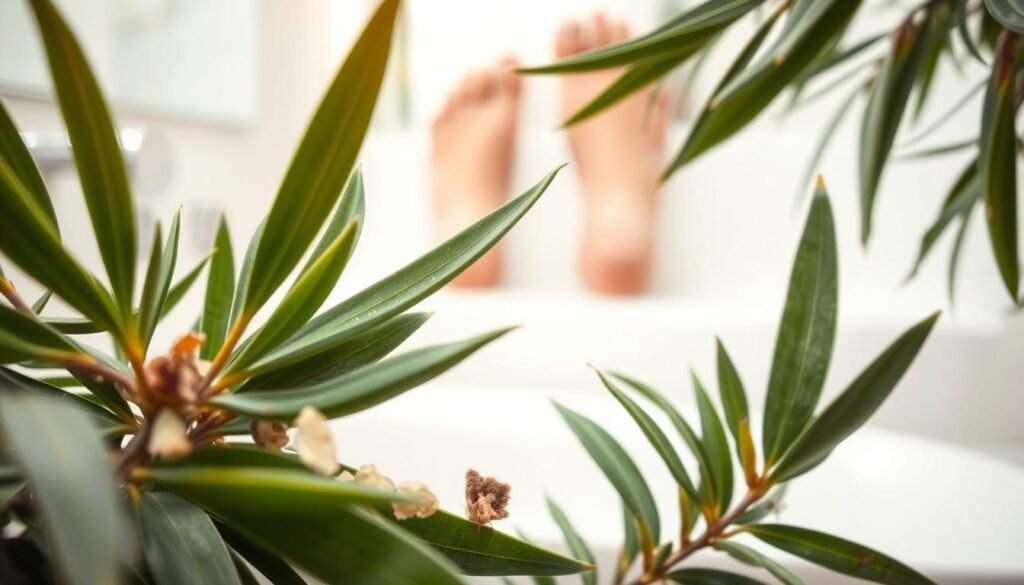
Tea tree oil is great for fighting off stubborn nail and foot infections. It can be used as a natural remedy while you see a doctor. Studies show it works well against fungal infections at low doses.
Treating nail fungus and onychomycosis
Studies show tea tree oil can stop nail fungus at certain concentrations. People have seen their symptoms get better when using it with other treatments.
To use it at home, mix a few drops of tea tree oil with coconut oil. Apply it to the nail every day. Remember to wash your hands afterward to prevent spreading the infection.
Athlete’s foot and other tinea infections
Tea tree oil can help with athlete’s foot symptoms like peeling and cracking. Its active ingredients make it effective against fungal infections.
Try mixing arrowroot powder, baking soda, and tea tree oil for a foot treatment. Apply it twice a day. Also, keep your feet dry and change your shoes often for better results.
Prevention strategies for fungal recurrence
To prevent fungal infections from coming back, keep your feet dry and change your shoes. Use tea tree oil in your shoes to help prevent infections.
If your symptoms get worse or you have diabetes, see a doctor. They might prescribe stronger treatments to help.
| Issue | Typical tea tree application | Evidence and notes |
|---|---|---|
| Nail fungus (onychomycosis) | Apply 1–2 drops of tea tree oil or 1:1 blend with carrier oil daily to the nail | In vitro inhibition at ~0.02%–0.04%; small human studies suggest benefit when used with conventional therapy |
| Athlete’s foot (tinea pedis) | Use topical tea tree oil in foot powders or diluted solutions twice daily; keep feet dry | Small-scale studies support symptom relief; effectiveness increases with hygiene and footwear care |
| Prevention of recurrence | Rotate shoes, dry feet thoroughly, use tea tree–based sprays or powders inside shoes | Antimicrobial components like terpinen-4-ol help reduce surface fungal load when used as adjunct prophylaxis |
Household and non-personal uses: cleaners, insect repellent, and produce protection
Tea tree oil can help reduce harsh chemicals in home care. It has broad antimicrobial activity. This makes it great for safer cleaning, keeping insects away, and protecting produce from fungi.
All-purpose natural cleaner recipe
Combine 20 drops of tea tree oil, 3/4 cup water, and 1/2 cup apple cider vinegar in a spray bottle. Shake well before each use. Spray on nonporous surfaces, wait a minute, then wipe clean with a cloth.
Always test on a hidden area first. Don’t use on porous or sensitive surfaces like untreated wood or some natural stone. This cleaner helps lower microbial load, but it’s not a substitute for EPA-registered disinfectants for strict disinfection.
Insect repellent and pest control
Tea tree oil can fight house fly larvae, some ants on produce, and repel mosquitoes in tests. Use diluted formulas on skin or create a spray for outdoor areas.
For a simple spray, mix 10–15 drops of tea tree oil with a cup of water and a teaspoon of mild soap. Diffusers and sprays might deter pests, but results vary. Keep away from pets and kids, and never apply undiluted oil on skin.
Reducing mold on produce and agricultural uses
Terpinen-4-ol in tea tree oil can reduce gray mold on fruits and veggies. Add 5–10 drops of tea tree oil to a bowl of water, swish produce, then rinse well under running water and dry.
Tea tree oil can be used in small-scale or postharvest treatments. But results depend on concentration and contact time. Rinse food well to avoid strong residues that might affect taste or cause irritation.
Personal care applications: deodorant, mouthwash, and soap
Tea tree oil is a versatile ingredient for personal care. It helps control odors, keeps your mouth clean, and makes soap bars effective. It’s used in products to fight bacteria, soothe skin, and refresh without harsh chemicals. Choose products that fit your skin type and sensitivity.
Natural deodorant and body odor control
Tea tree oil fights body odor by killing bacteria, not blocking sweat. You can make a natural deodorant by mixing it with coconut oil or arrowroot powder. Always test it on your skin first to avoid irritation.
For store-bought options, look for products with tea tree oil and calming ingredients like shea butter or aloe vera. The right dilution ensures the oil’s benefits without irritation.
Chemical-free mouthwash and oral health
Tea tree oil mouth rinses can help with gum inflammation and kill bacteria. Mix one drop of tea tree oil with warm water, swish for 30 seconds, and spit. Don’t swallow it because it’s toxic.
Choose mouthwashes from trusted brands that use safe amounts of tea tree oil and other antiseptics or soothers. These products should be gentle yet effective.
Soaps, bars, and skincare products
Tea tree oil can be found in bar soaps and cleansers. These products use gentle oils and botanicals for hair and skin care. Canary’s Tea Tree Bar Soap is a good example, offering cleansing and odor control while being vegan and cruelty-free.
It’s important to look at the concentration of tea tree oil in products. High-quality ones use effective yet gentle amounts. Be cautious of added ingredients that could irritate your skin. For sensitive skin, choose low-concentration bars and rinse well after use.
- Tip: Keep items labeled with concentration and batch dates to track tolerance over time.
- Tip: Store blends away from direct heat and sunlight to preserve potency.
- Tip: If you use tea tree for hair, combine it with a gentle shampoo base to address dandruff without over-drying the scalp.
Safety, precautions, and best practices for using tea tree oil
Tea tree oil can be very helpful, but safety is key. Before trying it, learn how to use it safely. This protects you, your family, and pets.
Allergy, irritation, and patch-testing
Always do a patch test first. Apply 1–2 drops of diluted tea tree oil on a small skin area. Wait 24 hours for any reaction.
If you have sensitive skin, mix tea tree oil with a carrier oil. Use olive, coconut, or sweet almond oil. Avoid using undiluted oil on thin or mucous-lined areas like the face or nose.
Toxicity and household safety
Never swallow tea tree oil. It can be toxic and needs immediate medical help. Keep all essential oils away from children to prevent accidents.
Be careful around pets. Dogs and cats may not react well to it. Talk to your vet before using it on pets or in their areas.
When to choose conventional treatment or see a professional
Tea tree oil can help with minor skin issues. But, don’t rely on it for serious infections.
See a doctor for deep wounds or if you have a fever. Ask a doctor if using tea tree oil with other treatments is safe for you.
Practical best practices
- Follow product labels and manufacturer guidance on concentration and use.
- When used aromatically, prefer controlled inhalation methods and short durations.
- Label containers clearly and store them in a cool, dark place away from children and pets.
- Avoid contact with eyes and mucous membranes; rinse thoroughly if accidental exposure occurs.
- Discontinue use if adverse effects appear and seek professional advice when needed.
Knowing how to use tea tree oil safely is important. By following proper dilution, testing, and getting professional advice, you can enjoy its benefits while staying safe.
Conclusion
Tea tree oil is a great, affordable choice for daily care. It works well for skin, nails, and cleaning thanks to its antimicrobial and antifungal properties. But, more studies are needed to confirm its effectiveness for many uses.
It’s important to understand the science behind tea tree oil. Its active compounds, like terpinen-4-ol and 1,8-cineole, are what make it effective. Look for products from trusted brands like Canary’s Tea Tree Bar Soap. Make sure to check the concentration and how to store it properly.
Tea tree oil can help with everyday issues like bad smells and minor wounds. It’s also good for your scalp. Always do a patch test and follow the right dilution. If you have serious skin or scalp problems, talk to a doctor.
Tea tree oil can be a helpful addition to your skincare routine. Just remember to use it safely and with quality products. This way, you can enjoy its benefits without any risks.
FAQ
What is tea tree oil and how does it work?
Tea tree oil comes from the leaves of Melaleuca alternifolia, a plant from Australia. It has compounds that fight bacteria, fungi, and some viruses. This oil is used in skincare, haircare, and cleaners.
It’s not related to true tea. Its traditional use by Aboriginal people led to its use in Western medicine.
In what forms and concentrations is tea tree oil available?
Tea tree oil is sold as pure essential oil and in diluted products. These products usually have 5% to 50% tea tree oil. You can find it in bottles, shampoos, soaps, and sprays.
Because it can irritate skin, most products have lower concentrations. This makes them safer for use.
How can tea tree oil help with acne?
Tea tree oil fights acne-causing bacteria and reduces inflammation. Mix one part tea tree oil with nine parts water for a 10% solution. Use it on your skin once or twice a day.
Start with a small amount and test it on your skin first. If you get irritation, stop using it.
Can tea tree oil help minor cuts, scrapes, and wound care?
Yes, tea tree oil can help minor wounds by fighting off pathogens. Clean the wound first, then mix one drop of tea tree oil with a teaspoon of carrier oil. Apply it and cover the area.
Repeat this process once or twice a day until the wound heals. But, see a doctor for bigger or infected wounds.
Is tea tree oil effective for soothing inflamed or irritated skin?
Tea tree oil can reduce redness and swelling. It’s good for mild irritation. But, if you have sensitive skin, start with a higher dilution.
Always do a patch test before using it on your skin. Avoid using it near your eyes or mucous membranes.
How does tea tree oil help with dandruff and scalp yeast?
Tea tree oil fights scalp yeast, which causes dandruff. You can add it to your shampoo or use a tea tree oil shampoo. Mix it with a carrier oil for scalp treatments.
Use it once a week and watch for any irritation. If your scalp problems don’t get better, see a dermatologist.
Can tea tree oil treat head lice?
Tea tree oil can help against head and body lice. Use it in diluted form or in shampoos. Be careful with children.
Follow the product instructions closely. If you’re unsure, talk to a doctor or pediatrician.
What tips improve scalp health when using tea tree oil?
Use diluted tea tree oil blends for scalp health. Avoid undiluted oil on sensitive scalps. Keep your hair clean regularly.
Scalp massages with tea tree oil can help. Stop if you get too much irritation or hair loss. See a dermatologist if problems persist.
How effective is tea tree oil for nail fungus and onychomycosis?
Tea tree oil can fight fungal growth in nails. Apply a few drops or mix it with a carrier oil daily. Results may take time.
Combining it with conventional antifungals can help. See a doctor for severe infections.
Can tea tree oil treat athlete’s foot?
Tea tree oil can help with athlete’s foot symptoms. Use a diluted blend on clean, dry feet twice a day. Keep your feet dry and clean.
If your condition gets worse, see a doctor.
How can you prevent fungal recurrence using tea tree oil?
Prevent recurrence by keeping areas dry and clean. Use tea tree oil sprays or powders. Treat early signs promptly.
For nails, apply it daily and follow up. Consult a healthcare provider for persistent infections.
What’s a simple all-purpose tea tree cleaner recipe?
Mix 20 drops of tea tree oil, 3/4 cup water, and 1/2 cup apple cider vinegar in a spray bottle. Shake well before each use. It adds antimicrobial properties.
Test it on a surface first. Avoid using it on porous or sensitive finishes.
Can tea tree oil repel insects or control pests?
Tea tree oil can repel some pests, like flies and ants. It can also repel mosquitoes. Use it diluted or in sprays.
It’s not as effective as some commercial repellents. Be careful around children and pets.
How can tea tree oil be used to reduce mold on produce?
Tea tree oil can fight mold on produce. Add 5–10 drops to water, swish the produce, then rinse and dry it well. Use it sparingly and rinse before eating.
How can you use tea tree oil for deodorant and body odor control?
Tea tree oil kills bacteria that cause body odor. Make a deodorant by mixing it with safe bases. Always patch-test and stop if irritation happens.
Use commercial deodorants with tea tree oil for safer use.
Is tea tree oil safe as a mouthwash?
Dilute tea tree oil can help with oral health. But, it’s toxic if swallowed. Use one drop in a cup of warm water and spit it out.
Avoid swallowing it. Talk to a dentist before regular use.
Are tea tree soap bars effective and safe for daily skincare?
Tea tree soap bars can be gentle and effective. Look for ones made with olive, coconut, and shea oils. They’re eco-friendly.
Choose milder formulas for sensitive skin. Always do a patch test.
How should you patch-test tea tree oil?
Apply 1–2 drops of diluted tea tree oil to your forearm. Cover it and wait 24 hours. If you get irritation, don’t use it on your skin.
For sensitive skin, use a higher dilution or choose a product with a low concentration.
What toxicity and household safety concerns should you know?
Never swallow tea tree oil—it’s toxic. Keep it away from children. Use caution with pets.
Avoid eye contact and mucous membranes. Store it safely and label it properly.
When should you choose conventional treatment instead of tea tree oil?
Use conventional treatments for severe or persistent infections. Also, for systemic symptoms, large wounds, or if you’re immunocompromised. Tea tree oil can complement treatments but shouldn’t replace them.
Consult a healthcare professional for advice.
How do you select reputable tea tree products and use them responsibly?
Choose products from trusted brands. Look for clear concentration and ingredient lists. Always do a patch test and store products safely.
Stop using it if you get irritation. For serious conditions, consult a healthcare professional.
