


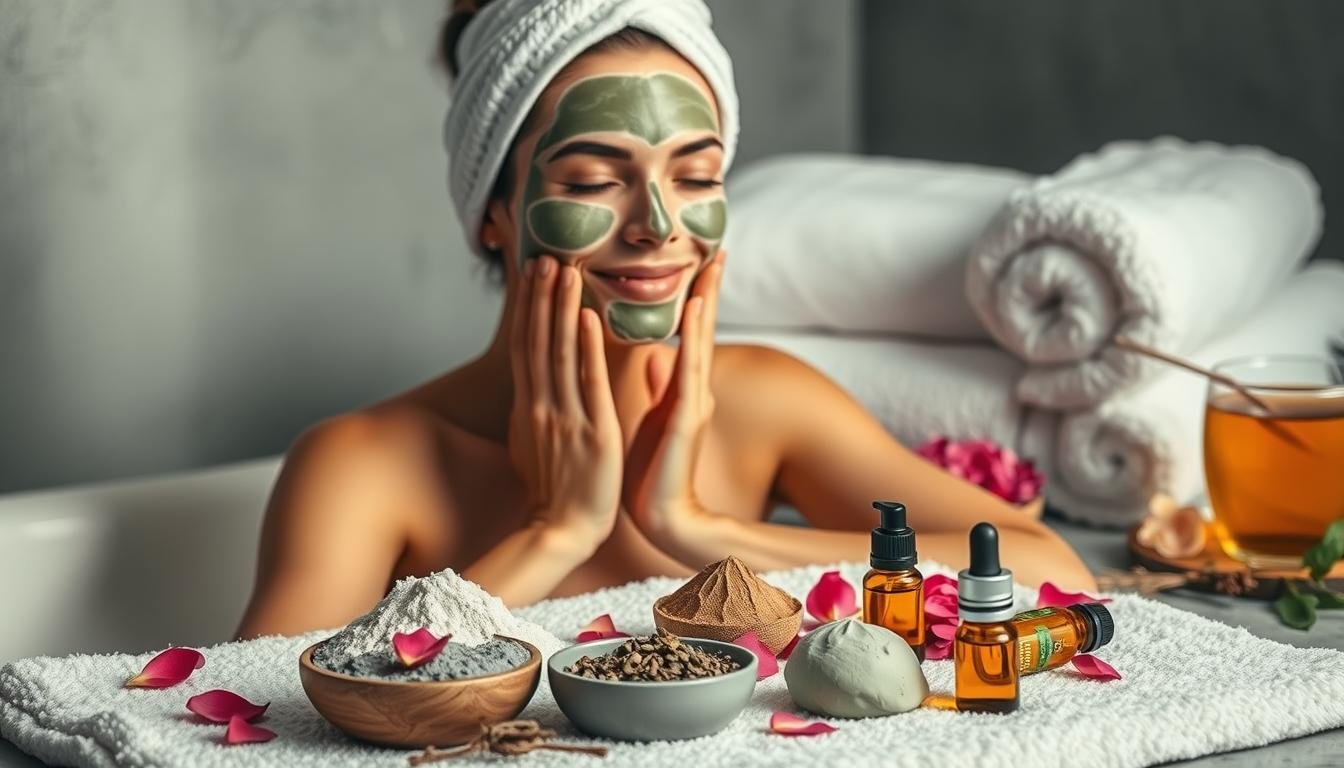
On a rainy Saturday, you choose to stay home instead of going to the salon. You grab a cleansing balm like DHC Deep Cleansing Oil and a gentle cleanser from La Roche-Posay. You also pick a favorite mask, like GlamGlow ThirstyMud.
As steam from a facial steamer rises, you start your routine. You cleanse, exfoliate, steam, mask, massage, and moisturize. You feel the same calm and glow as after a salon visit.
This article will guide you in making your own spa-like facials at home. You can use kits like the Ole Henriksen Power Peel or serums from SkinCeuticals and Kiehl’s. This way, you can enjoy facials at home without spending a lot.
Beauty experts say real homemade facials are more than just a sheet mask. By using cleansing balms, cleansers, exfoliants, and moisturizers, you refresh your skin. You also boost circulation and support your skin’s health over time.
Key Takeaways
- At-home facials can mimic spa results when you follow a complete sequence: cleanse, exfoliate, steam, mask, massage, and moisturize.
- DIY facial treatments using trusted brands like Dermalogica, Neutrogena, and Caudalie offer cost-effective benefits between professional visits.
- Simple tools—facial steamers and Clarisonic-style devices—can enhance product performance and results.
- Consistency and the right product order are more important than expensive items for long-term improvement.
- Skincare at home is both a self-care ritual and an effective way to maintain smoother, more radiant skin over time.
Why at-home facials work: benefits and professional perspectives
At-home facials are a great way to take care of your skin between visits to the clinic. You can do a full routine like double cleansing, exfoliating, steaming, masking, massaging, and hydrating. This helps clear your skin and makes your products work better.
Expert endorsements and consistency
Top skin experts like Joanna Vargas and Hadley King from Allure say at-home facials are good if done right. They say it can make your skin smoother, softer, and brighter. Edyta Jarosz suggests doing it at least once a week to keep your skin looking good.
Experts like Joanna Vargas and Hadley King say sticking to a routine is important. It helps your skin stay healthy and look its best.
Skin health benefits
Doing a full facial at home helps get rid of dead skin cells. This lets your skincare products work better. Double cleansing keeps your skin healthy while removing makeup.
Using things like AHAs and BHAs gently exfoliates your skin. Steam helps your skin absorb treatments better. Massaging your face improves blood flow and helps your skin look healthy.
Using ingredients like hyaluronic acid and ceramides helps keep your skin moist. This is important for your skin’s health.
When to skip or seek a pro
Don’t try to do extractions yourself unless you know what you’re doing. It can cause scars and make your skin worse. If your skin is really irritated, has a lot of acne, or looks infected, don’t do a facial.
Experts like Mona Gohara and Marisa Garshick say to be careful with inflamed skin. It’s best to see a dermatologist if you’re unsure. Always test new products on your arm first and only use one device at a time.
If your skin gets red, hurts, or reacts strangely, stop and see a dermatologist. Being careful and listening to experts makes at-home skincare safe and effective.
Setting the scene: atmosphere, timing, and frequency for best results
Start by creating a calm and focused mood. Dim the lights, play soft music, and light a candle or use an essential oil diffuser. Add cozy touches like a soft robe and a headband to make it feel special.
Choose a drink you love, like cucumber water or herbal tea, to enjoy during your facial. Experts like Tammy Fender and Joanna Czech say music and a peaceful setting help relax you. Pick your favorite songs to make your facial feel like a real escape.
Create a spa-like environment
Prepare a clean area with all the products you need. Use soft towels, a warm washcloth, and a muslin cloth for gentle product removal. These details make your skincare routine feel more luxurious and help you stay consistent.
Timing and how often to do at-home facial treatments
Do full facials once a week for most skin types. Use stronger treatments like chemical exfoliants or professional peels less often. Products like the Ole Henriksen Power Peel kits suggest doing them every two weeks or a month, depending on their strength.
Adjust how often you do facials based on your skin. If you have oily skin, you might need to exfoliate more. But if your skin is sensitive, give it more time to recover between treatments. If you see redness or irritation, stop and talk to a dermatologist.
Tools and optional devices
Use tools like facial steamers from Dr. Dennis Gross or Vanity Planet, jade rollers and gua sha stones from Mount Lai or Lanshin, LED devices, and gentle cleansing brushes. Tools like rollers and stones add a nice touch during massage.
Try new devices on less visible skin first. Don’t use too many devices at once to avoid irritation. If you easily get red, avoid tools like microcurrent or abrasive ones and stick to gentle methods.
Have basic extras ready: warm washcloths, muslin cloths, and soft extraction tools. A simple, consistent set of tools makes it easier to keep up with your skincare routine and feel confident in your treatments.
Cleanse and exfoliate: prepping your skin for deeper results
Begin your at-home facials by giving your skin a calm, effective reset. A gentle cleanse readies pores and helps treatments penetrate. Choose formulas with soothing ingredients when your skin feels reactive.
Double cleansing works in two steps to remove oil-based makeup, sunscreen, and pollutants, then clear water-based residue. Start with an oil cleanser or balm like DHC Deep Cleansing Oil or Dermalogica Precleanse. Massage in circular motions to dissolve sebum, then lift with a warm, damp cloth. Next, use a gentle foam or cream like SkinCeuticals Simply Clean or EltaMD Oil-in-Gel to finish. This method prevents stripping and supports balanced natural face care.
Double cleansing technique
Use an oil-based product first to dissolve makeup and sunscreen without harming skin lipids. Take your time with a two-minute massage to loosen buildup. Remove the oil with a warm cloth, then follow with a second cleanser chosen for your skin type.
Exfoliation options: physical vs chemical
Choose exfoliation based on skin texture and tolerance. Physical options include fine-grain scrubs and enzyme polishes such as Dr. Loretta Resurfacing Enzyme Polish or Beekman Milk Scrub. They work well for thicker, oilier skin when used gently.
Chemical exfoliants use AHAs or BHAs like glycolic, lactic, and salicylic acid. Blended products such as Biologique Recherche Lotion P50 or SkinMedica pads deliver steady, even resurfacing with less abrasion. Dermaplaning can remove vellus hair and dead cells but needs careful technique.
Safety tips for exfoliation
Limit acid use to one active product in your routine to protect the moisture barrier. If your skin is dry or sensitive, skip abrasive scrubs and prefer mild chemical options. Follow instructions for at-home peels like Ole Henriksen Power Peel, set timers, and neutralize when required to avoid irritation.
When using physical scrubs, pick small granules and avoid aggressive pressure. If you have doubts, consult a dermatologist before adding strong actives to homemade facials.
For gentle cleansing choices, consider formulas that include aloe vera or green tea to avoid stripping natural oils. Aloe vera calms and reduces inflammation while green tea provides antioxidants like EGCG to fight free radicals and soothe the skin. Learn more about these ingredients in natural face care at natural skincare ingredients.
| Step | Product Examples | Best For | Notes |
|---|---|---|---|
| Oil cleanse | DHC Deep Cleansing Oil; Neutrogena Ultra Light Face Cleansing Oil; Renée Rouleau Better Than Balm | All skin types; heavy makeup | Dissolves sunscreen and sebum; gentle on lipid barrier |
| Second cleanse | SkinCeuticals Simply Clean; EltaMD Oil-in-Gel | Sensitized to normal skin | Creams soothe; foams clarify pores |
| Physical exfoliant | Dr. Loretta Resurfacing Enzyme Polish; Beekman Milk Scrub | Thicker or oilier skin | Use fine granules; avoid heavy scrubbing |
| Chemical exfoliant | Biologique Recherche Lotion P50; SkinMedica Brightening Pads; salicylic acid | Most skin types; uneven texture | Consistent, gentler resurfacing; limit to one acid product |
| At-home peel | Ole Henriksen Power Peel (example) | Experienced users | Follow timing and neutralization steps to avoid burns |
Masking and steaming: targeted treatments for your skin concerns
Enhance your skincare routine with treatments for oiliness, dryness, or dullness. Use masks and steam to improve how well ingredients work and feel. Choose methods that fit your skin type and goals.

Choosing the right mask for your skin goal
Find a mask that matches your skin issue. For oily skin, clay masks like kaolin or bentonite help control oil and remove dirt. Hyaluronic acid, squalane, or panthenol in masks can fix dryness.
For brighter skin or to reduce lines, look for masks with peptides and antioxidants. Gentle exfoliants can also help. Brands like Caudalie, Kiehl’s, and GlamGlow offer great options. Or, try homemade masks like oatmeal, flaxseed, Greek yogurt, avocado, and honey.
How and when to steam
Steaming opens up your pores and makes your skin ready for masks. Use a facial steamer or a bowl-and-towel setup with hot water and citrus slices. Steam for a few minutes, but keep a safe distance to avoid burns.
Don’t steam if you have rosacea or very sensitive skin. Steam before applying a mask to help it work better. Pair steam with the right mask for the best results.
Mask removal and next steps
Remove masks gently with warm water and a soft cloth. Pat dry. Avoid rubbing or pulling to prevent damage.
After removing masks, use soothing products. Start with a hyaluronic acid serum like La Roche-Posay Hyalu B5. Then, apply a moisturizer with glycerin, ceramides, niacinamide, or squalane. Avoid acids or retinols right after exfoliating or using intense masks to prevent irritation.
- Tip: Switch up mask types; use clay for oil control and hydrating masks after exfoliating.
- Tip: When making homemade facials, skip raw spices to avoid irritating sensitive skin.
Facial massage and finishing steps: lock in moisture and boost circulation
After rinsing a mask, your skin is ready to soak up active ingredients. Start with light hydrators, then add richer creams to seal moisture and repair the skin barrier. The choices you make now will affect how long your results last after at-home facials.
Layering serums and moisturizers
Begin with a hydrating serum, like La Roche-Posay Hyalu B5 or SkinCeuticals H.A. Intensifier. These serums help draw water into your skin. Next, apply a cream with ceramides or squalane, such as Caudalie Premier Cru or a niacinamide-rich moisturizer, to keep hydration in.
Don’t use exfoliating acids or retinols right after masking. Instead, choose soothing antioxidants and nourishing oils for layering. This gentle approach supports natural face care and reduces irritation.
Facial massage techniques and tools
Use a product with enough slip—oil or a rich cream—to prevent tugging. Start at the decolletage and stroke upward. Move from the chin outward, sweep along the jaw, and end with circular motions on the forehead.
Focus on lymphatic drainage points: behind the earlobes, along the jawline, and near the nose. Spend 5–10 minutes total. Use light strokes to stimulate circulation without damaging capillaries.
Tools can enhance your results. A jade roller like Mount Lai adds a cooling touch. A gua sha tool from Lanshin or Sisley aids in drainage when used gently. Remember to drain rather than rub. Clean tools after each use to keep them effective.
Post-facial care and product longevity
Keep your routine simple for 24–48 hours after a treatment. Focus on glycerin, niacinamide, ceramides, and squalane to repair the skin barrier. Apply broad-spectrum SPF during the day if you were exfoliating earlier.
Track your product’s lifespan: many at-home kits, like Ole Henriksen Power Peel, offer a set number of treatments. Masks, such as GlamGlow ThirstyMud, provide predictable usage. Tools like steamers and rollers last longer when cleaned and tested regularly.
| Step | Recommended Product Examples | Purpose |
|---|---|---|
| Hydrating serum | La Roche-Posay Hyalu B5, SkinCeuticals H.A. Intensifier | Draws moisture into the skin, primes for layers |
| Sealant moisturizer | Caudalie Premier Cru, ceramide + squalane creams | Locks in hydration and supports barrier repair |
| Massage tool | Mount Lai jade roller, Lanshin gua sha, Sisley gua sha | Boosts circulation and aids lymphatic drainage |
| Short-term care | Glycerin, niacinamide serums, lightweight oils | Soothes and maintains results after at-home facials |
| Long-term upkeep | Broad-spectrum SPF, occasional pro treatments | Protects gains and extends product longevity |
Conclusion
You can get spa-worthy results at home with a simple routine. Start by double cleansing and exfoliating gently. Then, steam your face when needed.
Choose masks that fit your skin goals. Do a facial massage to boost circulation. Finally, use serums and moisturizers to lock in moisture.
These steps, done regularly, can improve your skin’s texture and glow. They help keep your skin healthy.
When choosing products, go for oil and foam cleansers. Use AHAs/BHAs or enzyme polishes for exfoliation. Clay or hydrating masks are good for different needs.
Be careful with your skin and avoid DIY extractions. Don’t overuse intense devices. If you’re unsure about strong products, talk to a dermatologist first.
Plan your DIY facials weekly or biweekly. Tailor each session to your skin type and concerns. Invest in a few good products and tools.
Learn basic facial massage techniques for better circulation. Enjoy the relaxing spa-like experience at home.
FAQ
What exactly is a full at-home facial and how does it differ from using a sheet mask?
A full at-home facial is like a spa treatment at home. It starts with double cleansing, then exfoliating, and sometimes steaming. Next, you apply a targeted mask, do a facial massage, and finish with serums and moisturizer.
This process refreshes your skin, improves how well products work, and boosts circulation. It also repairs your skin’s barrier. Sheet masks can’t do all this.
How often should I do an at-home facial?
Try to do a full facial once a week to avoid over-exfoliating. For milder or hydrating treatments, you can do them every two weeks. Adjust based on your skin type.
If you have oily skin, you might be able to exfoliate more. But if your skin is sensitive, do it less often. Follow the instructions for stronger peels or kits.
Which products and brands are reliable for building an at-home facial kit?
Start with an oil-based cleanser like DHC Deep Cleansing Oil. Then, use a gentle cream or foam cleanser, like SkinCeuticals Simply Clean. An AHA/BHA product or enzyme polish, like Dr. Dennis Gross pads, is also good.
Choose targeted masks, such as GlamGlow ThirstyMud, and hydrating serums and moisturizers. Tools like a facial steamer or jade roller can be optional.
Can I safely perform extractions at home?
Most experts say no to DIY extractions unless you’re trained. It can lead to scarring, infection, and more inflammation. If you try, be very careful and stop if it doesn’t come out easily.
If unsure, it’s best to see a professional for extractions.
Should I steam my face during an at-home facial?
Steaming can help soften your skin and make masks work better. Use a facial steamer or a bowl-and-towel method for a short time before masking.
But skip steaming if you have rosacea or very reactive skin. It can make things worse.
What’s the safest way to exfoliate at home?
Choose exfoliation based on your skin type. Chemical exfoliants like AHAs and BHAs are good for many skin types. Physical scrubs and enzyme polishes are better for thicker or oilier skin.
Use only one active acid product at a time. Avoid scrubbing too hard. If your skin is dry or sensitive, go for gentler options.
How do I choose the right mask for my concern?
Choose a mask based on your skin goal. Clay masks are great for oil control and detox. Hydrating masks with hyaluronic acid or squalane are good for dry skin.
For brightening and smoothing, use masks with peptides or antioxidants. You can also try DIY recipes for hydration or soothing, but avoid strong irritants.
What steps should I follow immediately after removing a mask?
Remove the mask gently with warm water and a muslin cloth. Then, apply hydrating serums and a moisturizer that repairs your skin barrier.
Avoid using retinols or strong acids right after exfoliation. Apply SPF during the day after a facial.
How important is facial massage and what tools should I use?
Facial massage boosts circulation, lymphatic drainage, and product absorption. Use a product with good slip and massage gently for 5–10 minutes.
Use upward and outward strokes from the décolletage to jaw, then cheeks, nose, and forehead. Tools like jade rollers or gua sha can help, but avoid too much pressure.
Can I combine multiple at-home devices in one facial?
Experts say to test devices on less visible skin and use only one device per facial. Combining devices can overstimulate your skin and cause irritation, especially if you’re prone to redness.
What should I avoid immediately after a strong at-home peel or exfoliation?
After strong chemical exfoliation, avoid the sun, retinols, other acids, and harsh treatments for 24–48 hours. Stick to simple, hydrating products like hyaluronic acid and ceramides.
Always use sunscreen the next day.
How do I know when to see a dermatologist instead of continuing at-home care?
See a dermatologist for persistent acne, inflamed or infected lesions, unexplained discoloration, or severe irritation after at-home treatments. They can also help with strong actives if you’re unsure.
Professional care is recommended for complex procedures like deep chemical peels or dermaplaning if you lack experience.
What atmosphere and small touches make an at-home facial feel spa-like?
Create a relaxing atmosphere with dim or soft lighting and calming music. Use an essential oil diffuser or candle, and wear a robe or headband.
Add a warm washcloth, cucumber water or tea, and relax. Reducing stress enhances the facial’s benefits for your skin and mood.
Which ingredients should I prioritize to restore and protect my skin barrier after a facial?
Look for humectants and barrier-repairing ingredients like hyaluronic acid, glycerin, and niacinamide. Ceramides, squalane, and gentle antioxidants are also good.
These ingredients help replenish hydration, reduce water loss, and soothe the skin after exfoliation and masking.
Are DIY pantry masks safe and effective?
Some pantry masks, like oatmeal for soothing or Greek yogurt for hydration, can be beneficial. Honey has antimicrobial properties. But avoid raw spices and citrus or aggressive ingredients that can irritate.
Always patch-test any DIY mask on your inner arm first. Stop use if you see redness or stinging.
What basic toolkit should I invest in for consistent, cost-effective at-home facials?
Start with a core kit: an oil cleanser, a gentle cream or foam cleanser, a chemical exfoliant or enzyme polish, a hydrating mask, a clay mask, a hyaluronic acid serum, and a rich moisturizer with ceramides or squalane.
Quality over quantity is key. Consistent weekly use will save you money compared to frequent spa visits.
