


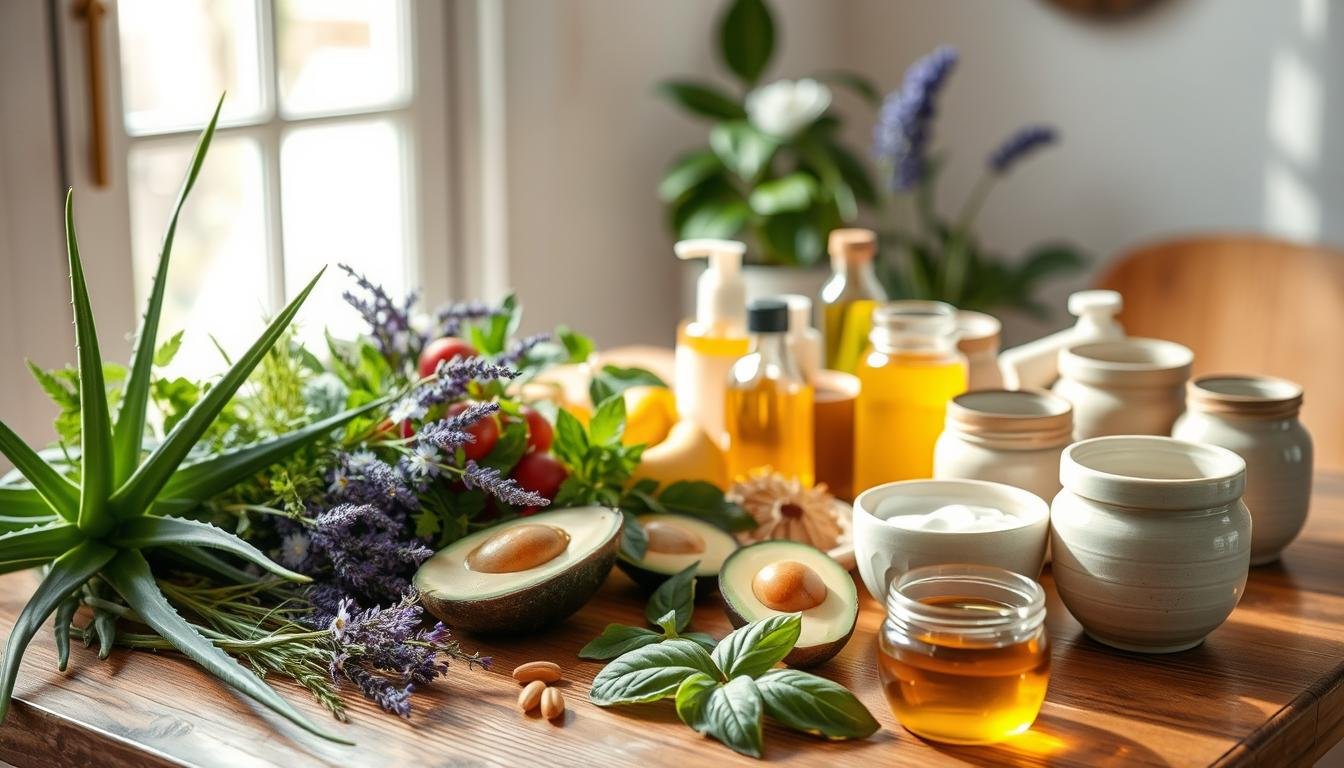
At first, you see a change in the mirror. A week of using aloe vera and a honey-and-oat cleanser makes your skin look better. This simple change started in your kitchen, where you mixed pantry items with curiosity. It showed you that radiant skin comes from small, consistent steps, not a long list of products.
Your skin reflects your health. Using natural skincare remedies and homemade products helps keep it hydrated and balanced. This way, you avoid harsh chemicals and focus on overall wellness.
This guide will show you how to use common plants and safe DIY recipes. You’ll also learn about lifestyle changes that boost your skin. Start by adding coconut oil for moisture or green tea as a toner. This way, your routine will support your skin health and complement professional care when needed.
Key Takeaways
- Small, consistent changes with natural skincare remedies can improve hydration and texture.
- Homemade skin care remedies often use pantry staples like aloe, honey, and coconut oil.
- Plant-forward approaches fit within broader holistic skin treatments and lifestyle habits.
- Incremental substitution of products reduces synthetic exposure without losing efficacy.
- Professional dermatologic care remains important for persistent or concerning skin issues.
Why plant-based and organic skin care solutions matter for your complexion
Your skin shows more than what you put on it. It reflects your hydration, diet, sleep, gut health, and pollution exposure. Focusing on your whole body wellness boosts the effects of your skin care. Holistic treatments combine good habits with gentle, targeted care for a healthier look.
Connection between skin health and whole-body wellness
Think of skin as an organ that shows what’s happening inside. Drinking water, eating fruits, veggies, and healthy fats, and taking probiotics help digestion and immunity. These actions reduce inflammation and improve skin’s barrier function, making topical remedies more effective.
Benefits of plant-based skincare remedies: antioxidants, anti-inflammatories, and humectants
Plant-based skincare remedies offer many benefits. Antioxidants like green tea, turmeric, and vitamin C from citrus fight aging. Anti-inflammatories like aloe vera and chamomile soothe redness and irritation. Humectants like honey and aloe keep skin moist, making it look plumper.
Why you should consider organic skin care solutions to reduce irritants and synthetic exposures
Organic skin care limits harmful chemicals and fragrances that can irritate skin. Choosing organic botanicals reduces chemical exposure, great for sensitive skin. But remember, natural doesn’t mean safe for everyone. Always patch test before using widely.
How natural skincare remedies interact with your skin barrier and biology
Knowing how natural skincare works with your skin is key to picking the right products. The outer layer, the stratum corneum, keeps your skin’s pH acidic, holds moisture, and keeps out bad stuff. Avoid harsh washing and use lukewarm water to keep your skin’s barrier strong.
Your skin’s acid mantle is crucial, sitting at a pH of 4.5–5.5. This acidity helps good bacteria and keeps bad ones away. Losing lipids makes your skin lose moisture and get sensitive. Use warm showers and gentle cleansers to keep your skin healthy.
Key mechanisms: antioxidant protection, gentle enzymatic exfoliation, and anti-inflammatory action
Antioxidants fight off damage from UV and pollution. Green tea and vitamin C from citrus or papaya protect your skin. Enzymes like papain from papaya and lactic acid in yogurt gently remove dead skin. Anti-inflammatory plants like aloe vera and chamomile calm redness and soothe your skin.
How common natural ingredients support barrier repair and glow
Aloe vera hydrates and gently exfoliates, perfect for after cleansing. Raw honey moisturizes and fights bacteria, great for acne-prone skin. Green tea reduces inflammation and protects against sun damage. Use it as a toner or mist.
Coconut oil is good for inflammation and antioxidants, but it can clog pores. Choose skincare that fits your skin type. For dry skin, use humectants and barrier oils. For oily skin, pick non-comedogenic products. This way, you protect your skin while getting the glow you want.
Safety first: practical natural skincare tips and precautions
When you try herbal skincare remedies at home, safety is key. Start with a small, controlled test to spot irritation early. Use simple checks to protect your skin while exploring plant-based solutions.
Patch testing and recognizing allergies or sensitivities
Always patch test new ingredients on your inner forearm or behind the ear for 24–48 hours. Look for redness, itching, swelling, or blistering. Some people react to aloe vera, coconut oil, or citrus; if you see any of these signs, stop using the product immediately.
If a reaction appears in sun-exposed areas, it might be due to photosensitivity from citrus juices or certain botanicals. Keep a simple log of reactions so you can tell a clinician what happened if symptoms persist.
Proper dilution of essential oils and safe handling of potent botanicals
Essential oils are very concentrated. Dilute them in a carrier oil like jojoba, sweet almond, or fractionated coconut oil. A common guideline is 1–2 drops of essential oil per teaspoon of carrier for facial blends. Never apply undiluted essential oils to skin.
Use clean tools and sterile containers to mix and store blends. This step limits bacterial contamination and keeps your remedies safe for repeated use. When in doubt, choose milder options such as rosehip or calendula for sensitive skin.
When to stop a home remedy and consult a dermatologist
Stop any home remedy that causes a persistent rash, burning, blistering, severe swelling, or worsening acne. Seek a board-certified dermatologist for cystic acne, severe eczema, psoriasis, rapidly changing moles, or persistent allergic reactions.
If you need guidance on safe ingredient choices or prescription therapy, a dermatologist can help you balance herbal skincare remedies with medical treatments. For extra reading on ingredient safety and timelines for results, visit natural skincare ingredients over 40.
| Risk | Warning signs | Immediate action |
|---|---|---|
| Allergic contact dermatitis | Redness, itching, raised bumps | Stop product, wash area, consider antihistamine |
| Photosensitivity | Sunburn-like pain or redness after sun exposure | Avoid sun, discontinue citrus or bergamot topical use |
| Essential oil irritation | Burning, stinging, peeling | Rinse with water, dilute future mixes, perform patch tests |
| Infection due to contamination | Pus, increased pain, spreading redness | Stop use, seek medical care for possible antibiotics |
| Worsening chronic condition | Persisting eczema, inflamed acne, spreading rash | Consult a board-certified dermatologist promptly |
DIY natural beauty recipes you can make at home
Try simple, kitchen-based formulas to support your daily routine. These homemade skin care remedies are easy to mix and let you control ingredients. Start small and patch test each combination before full-face use.
Gentle cleansers
For dry or sensitive skin blend 1 tbsp finely ground oatmeal with 2 tbsp raw honey. Massage on damp skin for a minute, then rinse. Oatmeal soothes irritation while honey draws and retains moisture.
For oily or combination skin mix 1 tbsp bentonite or kaolin clay with water to a soft paste and add 1 drop tea tree oil diluted in a carrier like jojoba. Apply briefly and rinse before the clay fully dries to avoid overdrying.
Toners and mists
Brew strong green tea, cool completely, and store refrigerated up to one week. Mist after cleansing to deliver antioxidant support and calm redness. These natural skincare remedies work well when used under serums and moisturizers.
Combine equal parts pure aloe vera gel and rosewater in a spray bottle, shake, and spritz for instant hydration. Use the aloe and rosewater mist between steps to refresh skin without stripping oils.
Masks and exfoliants for weekly use
For an enzymatic exfoliant mash ripe papaya and apply the pulp for 10–15 minutes. Papain gently lifts dead skin cells without harsh abrasion. Rinse thoroughly and follow with sunscreen when heading outdoors.
Mix 2 tbsp ground oats with 3 tbsp plain unsweetened yogurt for a soothing mask. Leave 15 minutes. Yogurt’s lactic acid offers mild chemical exfoliation while oats reduce inflammation and redness.
Targeted spot treatments
For blemishes dilute 1 drop tea tree oil into 1 tsp carrier oil such as jojoba. Apply with a cotton swab only to the lesion. Never use undiluted tea tree on bare skin.
To address dark spots mix 1/2 tsp turmeric with 2 tbsp plain yogurt and apply for 10 minutes. Turmeric can temporarily stain; rinse thoroughly and use sunscreen afterward to prevent further pigmentation.
Use masks one to two times weekly and avoid over-exfoliation. Keep a simple log of reactions and improvements so you can refine your homemade skin care remedies over time.
| Recipe | Key Ingredients | Skin Types | Frequency |
|---|---|---|---|
| Honey‑Oat Cleanser | Ground oatmeal, raw honey | Dry, sensitive | Daily or every other day |
| Clay & Tea Tree Cleanser | Bentonite/kaolin clay, tea tree (diluted) | Oily, combination | 2–3 times weekly |
| Green Tea Toner | Brewed green tea | All types, especially irritated | Daily |
| Aloe & Rosewater Mist | Aloe vera gel, rosewater | Dry, sensitive, normal | As needed |
| Papaya Enzyme Mask | Ripe papaya | Normal to oily, dull skin | Weekly |
| Oatmeal‑Yogurt Mask | Ground oats, plain yogurt | Sensitive, inflamed | 1–2 times weekly |
| Diluted Tea Tree Spot Treatment | Tea tree oil, carrier oil | Blemish‑prone | Spot as needed |
| Turmeric‑Yogurt Brightener | Turmeric, plain yogurt | Hyperpigmented areas | Weekly, monitor staining |
Practical lifestyle strategies that amplify homemade skin care remedies
Small daily choices add up. Pair your homemade cleansers and masks with consistent habits. This protects the barrier and extends results from natural remedies. Follow a simple routine to keep skin calm, hydrated, and resilient.
Daily habits: consistent cleansing, moisturizing while skin is damp, and sunscreen use
Cleanse gently after heavy sweating, in the morning, and before bed. Avoid scrubbing or using too much water, as it removes protective lipids.
Apply moisturizer while skin is still damp from a shower or rinse. This helps the barrier repair and gives a plumper look.
Use sunscreen every morning with SPF 30 or higher. Sun protection is key to preventing premature aging and preserving DIY serum benefits.
Nutrition, hydration, and probiotics to support skin from the inside out
Eat a variety of fruits, vegetables, and healthy fats like salmon or flaxseed. These supply vitamins and antioxidants that support collagen and tone.
Drink enough water daily, adjusting for activity level and climate. This maintains surface hydration and metabolic clearance.
Include fermented foods or consider supplements with probiotics for skin balance. Research shows these can reduce inflammation and help clear breakouts when used with topical care.
Smoke avoidance, shorter showers, and seasonal routine adjustments for sustained radiance
Avoid active and secondhand smoke. Tobacco accelerates oxidative damage and undermines the repair effects of natural remedies.
Keep showers shorter and cooler. Hot, steamy water strips oils and can leave skin dull; finish with a brief cool rinse to boost circulation.
Adjust formulas by season. In winter, use richer oils like shea or jojoba and add occlusives to your night routine. In summer, switch to lighter lotions, aloe-based mists, and clay masks to manage excess oil and heat.
These lifestyle actions strengthen the outcomes from your homemade recipes. Treat them as integral steps in a set of holistic skin treatments that work together with surface care for lasting radiance.
Storage, shelf life, and seasonal swaps for homemade skin formulations
Smart storage and clear labeling are key when making homemade skin care remedies. Store water-based items like toners and yogurt masks in the fridge. Use them within a week. If you notice any off-odor, color change, or separation, it’s time to throw it out.
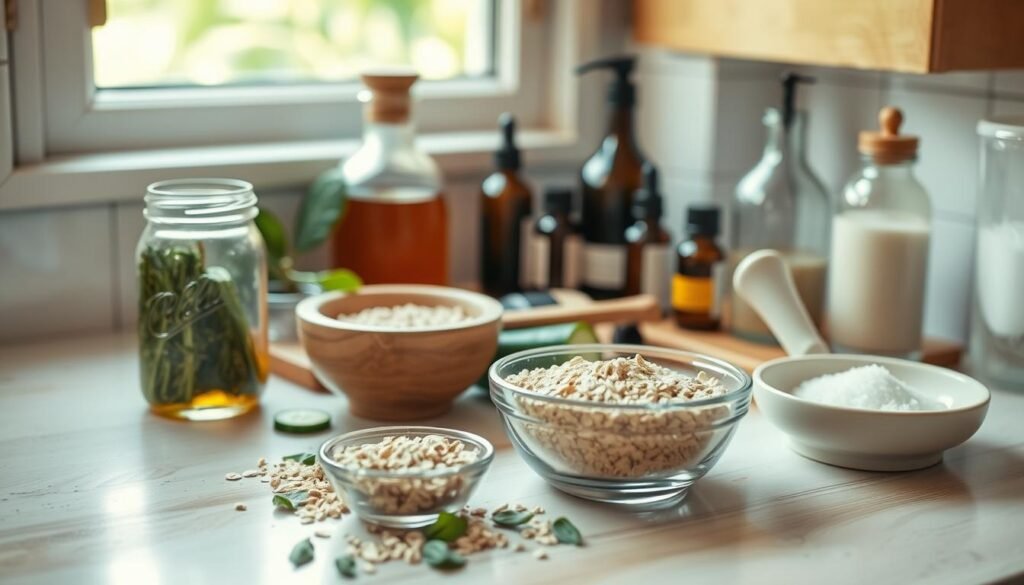
How to store water-based vs. oil-based remedies
Water-based items spoil faster. Keep them chilled in airtight glass jars. Making small batches helps reduce waste.
Oil-based mixtures last longer. Store carrier oils in a cool, dark place. Note the dates and rotate your stock to avoid rancidity.
Realistic shelf-life expectations
Refrigerated, preservative-free mists and masks last about seven days. Oil blends can last months to a year. Dry powders like oats and clays stay stable when sealed and dry.
Ingredient swaps by season
Seasonal skincare swaps are important. In winter, use heavier butters and oils like shea butter and avocado oil. They protect against dry indoor heat.
In summer, choose cooling, lightweight options like aloe vera and green tea. These soothe sun-exposed skin and control oil. Rotate ingredients with the seasons for a responsive routine.
Hygiene and contamination prevention
Sanitize jars and tools before use. Use a single-use spatula or cotton swab for each application. Label containers with preparation date and ingredients.
When treating active lesions, use sterile applicators. Avoid sharing products that have touched broken skin. These steps reduce risk and extend your homemade skin care remedies’ life.
For a seasonal routine guide tailored to mature skin concerns, see this practical resource: anti-aging skincare routine for 40s. Use storage for DIY skincare and seasonal swaps to keep your formulas fresh and your skin calm year-round.
Conclusion
Using natural skincare remedies can make your skin healthier. It’s fun and easy when you mix plant-based ingredients with good habits. Drink plenty of water, eat well, use sunscreen with SPF 30+, and keep your skin clean.
This article will help you use DIY recipes safely. Always test new ingredients on a small area first. Mix strong plants with water and store your skincare right. Changing your routine a little bit at a time works best.
Many natural ingredients are good for your skin. They can fight off damage and keep your skin moist. But, they can’t replace doctor visits if your skin problems don’t get better.
Begin slowly and watch how your skin reacts. Use natural and proven methods together. With time and the right steps, you’ll have a glowing complexion.
FAQ
What are natural skincare remedies and why should you consider them?
Natural skincare remedies use plant-based ingredients like aloe vera and honey. They help hydrate and soothe your skin. Using organic products can also reduce exposure to harmful chemicals.
But remember, natural doesn’t always mean safe. Always do a patch test before using new products.
How does your skin reflect overall health and why does that matter for natural approaches?
Your skin shows how healthy you are. Things like hydration, nutrition, and sleep affect it. Natural skincare works best when you take care of your whole body.
How do natural ingredients like green tea, papaya, and honey actually work on your skin?
Green tea has antioxidants that protect your skin. Papaya gently exfoliates without scrubbing. Honey keeps your skin moist and fights bacteria.
These ingredients brighten, calm, and hydrate your skin. They also help keep your skin barrier healthy.
Will coconut oil clog my pores or help heal my skin?
Coconut oil can be good for your skin, but it might not be for everyone. It can cause breakouts in oily or acne-prone skin. Always test it first.
If you get more breakouts, try a different oil like jojoba or almond.
How do I safely use essential oils and potent botanicals in DIY recipes?
Always mix essential oils with a carrier oil. Start with a small amount. Never apply undiluted essential oils to your skin.
Use clean tools and containers. Be careful with strong ingredients like citrus juice.
What is a reliable patch-testing method before full-face use?
Apply a small amount to your inner forearm or behind your ear. Cover it if needed. Watch for 24–48 hours for any reactions.
If you see redness or itching, rinse it off and don’t use it on your face. This is especially important for aloe vera and essential oils.
Which gentle cleanser recipes suit different skin types?
For dry skin, try a honey-oat cleanser. Mix oatmeal and honey on damp skin, then rinse. For oily skin, use a clay and tea tree cleanser.
Blend clay with water and add tea tree oil. Rinse before it dries to avoid dryness.
What toners and mists can you make at home to calm and hydrate skin?
Make a green tea toner by cooling strong tea and storing it in the fridge. Use it as a toner or mist for antioxidants.
For a soothing mist, mix aloe vera gel and rosewater. Store it in the fridge and use within a week.
How often should you use masks and exfoliants like papaya or yogurt-oat?
Use masks 1–2 times a week. Papaya masks for 10–15 minutes and oatmeal-yogurt masks for 15 minutes. Avoid over-exfoliating.
Can turmeric help with dark spots and how do you prevent staining?
Turmeric can brighten dark spots with consistent use. But it can stain skin and clothes. Remove it well and use sunscreen daily.
What daily habits should you prioritize alongside DIY skincare to see real improvement?
Cleanse your skin regularly, moisturize while it’s still damp, and apply sunscreen daily. Eat a balanced diet and stay hydrated.
Consider probiotics for better gut health and skin.
How does smoking and showering habit affect your skin barrier?
Smoking damages your skin and causes early aging. Hot showers also harm your skin. Use lukewarm water and cool rinse to protect your skin.
How should you store homemade, preservative-free skincare and what are realistic shelf-lives?
Store water-based products like toners in the fridge for up to a week. Oil-based products can last months to a year in a cool, dark place.
Keep dry powders sealed and mix fresh before use. Always label with the date you made it.
What seasonal ingredient swaps should you consider to match climate and skin needs?
Use richer oils in winter to fight dryness. In summer, switch to lighter ingredients like aloe vera to control oil and soothe sun-exposed skin.
Make gradual changes to avoid shocking your skin.
When should you stop using a home remedy and seek a dermatologist?
Stop using a remedy if it causes a rash, burning, or worsens acne. See a dermatologist for serious conditions like cystic acne or moles.
They can help with conditions that don’t improve with home care.
How can you prevent contamination when making and using DIY skincare?
Use sanitized jars and single-use tools. Avoid double-dipping. Make small batches and discard if you see mold or off-odors.
Use sterile tools for active lesions to avoid infection.
Are probiotics helpful for skin, and how should you integrate them?
Probiotics can help your skin by supporting gut health. Eat probiotic-rich foods or take supplements. Results vary, so use them with topical care and consult a doctor.
How many times can you repeat natural treatments like masks each week without harming your skin?
Limit masks and exfoliants to 1–2 times a week. Mild hydrating masks can be used more often if your skin can handle it. Always watch for signs of irritation.
