


Spotting a new pimple the morning of a big meeting can really knock your confidence. It’s a common problem for students, professionals, and parents in the U.S. Acne follows patterns and can be managed with the right care.
This guide will lead you through understanding skin breakouts and finding effective treatments. You’ll learn about over-the-counter and prescription options, as well as professional procedures. Remember, it takes time for treatments to work, often 4–6 weeks, and prescriptions can take even longer.
You’ll also discover the trade-offs between at-home tools and in-office treatments. Brands like Banish show how to choose between Vitamin C serums and enzyme masks. Our aim is to provide you with realistic advice for managing breakouts safely and effectively. You can always see a dermatologist if you need more help.
Key Takeaways
- Acne is common and manageable with consistent acne skincare and informed acne treatment choices.
- Expect measurable improvement in about 4–6 weeks for many therapies; prescriptions may take longer.
- Combine OTC actives, lifestyle changes, and professional care for the best control of skin breakouts.
- Weigh efficacy and safety when choosing between at-home tools and in-office procedures.
- Access to U.S. dermatology services and product lines helps tailor treatment to your skin and severity.
Understanding Acne: Causes, Types, and How It Starts
Acne starts when a hair follicle gets clogged by too much oil and dead skin. This blockage creates a spot where bacteria can grow, causing inflammation and skin breakouts. It’s important not to over-wash your skin, as this can make it produce more oil and make acne worse.
What it is and how clogged pores form
Pores are tiny openings for hair and oil glands. When sebum and dead skin cells mix, they can block the pore. This blockage can either stay closed and form a whitehead or open up and turn dark as a blackhead. Bacteria growing around the blockage can cause redness, swelling, and pus in more serious cases.
Common lesion types you should know
Whiteheads are closed comedones that stay hidden under the skin. Blackheads are open comedones with a dark top from oxidized melanin, not dirt. Papules are small, firm, red bumps without pus. Pustules are like papules but have pus at the tip. Cysts are deep, painful nodules that can scar if not treated.
Key drivers behind flare-ups
Hormonal changes can increase oil production. Androgens during puberty and menstrual cycle changes or pregnancy often lead to more acne. Genetics also play a role, making some skin more prone to acne.
Diet can affect inflammation and insulin levels. Foods high in sugar and dairy may cause more breakouts in some people. Stress can also trigger hormonal changes that worsen acne.
Using comedogenic or irritating skincare products and makeup can block pores. Look for non-comedogenic, fragrance-free products to reduce this risk.
Identify your main acne type and common triggers—like hormones, diet, or products—to choose the right treatments and preventives for clearer skin.
| Lesion Type | Appearance | Likely Cause | At-Home Action |
|---|---|---|---|
| Whitehead (closed comedone) | Small, flesh-colored bump under skin | Pore blockage by oil and dead cells | Use gentle exfoliant with salicylic acid; avoid picking |
| Blackhead (open comedone) | Small dark-topped spot, non-inflamed | Oxidized debris in open pore | Daily cleansing and BHA products to clear pores |
| Papule | Small, red, tender bump | Mild inflammation from bacteria and clogged pore | Spot treat with benzoyl peroxide; avoid irritation |
| Pustule | Raised lesion with visible pus | Inflamed infection around a plugged follicle | Topical antimicrobials and gentle care; don’t pop |
| Cyst | Deep, large, painful nodule | Severe inflammation and trapped bacteria | Seek dermatologist for prescription therapy |
Recognizing Hormonal Acne and Cystic Acne
Breakouts often follow a pattern. Hormonal changes can lead to more oil and clogged pores. These usually appear on the jawline and chin, especially before your period or when stressed.
How hormone fluctuations drive breakouts around the jawline and chin
Androgens cause your sebaceous glands to make more oil. This oil mixes with dead skin and bacteria, blocking hair follicles. You might see small bumps or deep nodules on your lower face. These are signs of hormonal acne, which can last into your 20s, 30s, and beyond.
What cystic acne looks and feels like and why it’s more severe
Cystic acne shows up as large, painful lumps under the skin. These are red, swollen, and take time to heal. Because they form deep, cystic acne has a higher chance of scarring. It’s important to recognize these nodules quickly to avoid making them worse.
Treatment considerations for hormonal and cystic presentations
Treatment depends on how severe the acne is and what’s causing it. For hormone-driven acne in women, birth control pills or spironolactone can help. For severe cystic acne, doctors might start with antibiotics to fight infection and inflammation. Then, they might use isotretinoin for long-term results.
There are also procedural options for stubborn lesions. Intralesional steroid injections can quickly shrink a cyst. Dermatologic drainage can also help by reducing pressure and pain. But, avoid trying to squeeze out pimples at home to lower the risk of scarring.
| Feature | Hormonal Acne | Cystic Acne |
|---|---|---|
| Typical location | Jawline, chin, lower face | Any area; often lower face, cheeks, jawline |
| Appearance | Small red bumps, occasional nodules | Large, deep, painful nodules or cysts |
| Primary acne causes | Androgen-driven sebum production and menstrual cycle | Deep inflammation, bacterial involvement, severe blockage |
| Scarring risk | Moderate if untreated | High without prompt treatment |
| First-line treatments | Oral contraceptives, spironolactone, topical retinoids | Oral antibiotics, isotretinoin, intralesional steroids |
| When to see a dermatologist | Persistent monthly flares or adult-onset cases | Severe pain, rapid growth, or multiple deep cysts |
Evidence-Based Acne Treatments: OTC, Prescription, and Professional Options
When breakouts don’t go away, you need good choices for your skin. This section covers proven options, from easy-to-find over-the-counter products to prescription treatments and professional procedures. It’s a guide to help you find the right acne treatment for your skin type and how bad it is.
Over-the-counter essentials
Salicylic acid clears pores by breaking down dirt and gently removing dead skin. It’s great for blackheads and mild acne. Benzoyl peroxide fights bacteria and reduces redness, but start with a low dose to avoid skin irritation. Topical retinoids, like adapalene, help cells turn over faster, prevent clogged pores, and fade dark spots over time. Using a BHA, benzoyl peroxide, and a retinoid together is a strong start to treating acne.
Prescription therapies
If over-the-counter products don’t work, your doctor might prescribe stronger treatments. Topical antibiotics like clindamycin or erythromycin can lower bacteria. Oral antibiotics, such as doxycycline or minocycline, treat more severe acne for a short time. For acne caused by hormones, spironolactone can help. Isotretinoin is used for severe acne and must be closely monitored because of its potential side effects.
When to see a dermatologist and in-office procedures
See a dermatologist for painful nodules, fast-growing scars, or acne that doesn’t get better with over-the-counter treatments. Dermatologists can do chemical peels to improve skin texture. Laser and light treatments target oil, bacteria, and skin repair. Professional extractions and steroid injections can quickly help with big, painful spots. Using professional treatments with a good skincare plan can lead to better results.
| Option | Typical Use | Benefits | Considerations |
|---|---|---|---|
| Salicylic acid (OTC) | Blackheads, mild acne | Clears pores, gentle exfoliation | May dry sensitive skin; sun protection advised |
| Benzoyl peroxide (OTC) | Inflammatory acne | Antibacterial, reduces redness | Can bleach fabrics; start low to reduce irritation |
| Topical retinoids (OTC/prescription) | Comedonal acne, hyperpigmentation | Prevents new lesions, improves texture | Irritation common at start; use nightly |
| Topical antibiotics | Inflammatory lesions | Reduces bacterial load | Use with benzoyl peroxide to limit resistance |
| Oral antibiotics | Moderate inflammatory acne | Quick reduction in inflammation | Short-term use recommended; side effects possible |
| Spironolactone | Hormonal acne in women | Reduces androgen-driven breakouts | Requires medical monitoring; not for pregnancy |
| Isotretinoin | Severe, scarring, or resistant cystic acne | Long-term remission possible | Strict supervision and pregnancy prevention required |
| Chemical peels (in-office) | Texture, mild scarring, pigmentation | Exfoliates, evens tone | Multiple sessions often needed; downtime varies |
| Laser and light therapy | Inflammation, scarring, oil control | Targets bacteria and tissue remodeling | Costly; results vary by device and skin type |
| Extractions & intralesional steroids | Painful nodules and cysts | Rapid relief, prevents deep scarring | Should be done by a trained professional |
Managing Acne Scars and Hyperpigmentation
Dealing with acne scars and dark spots can feel like a second battle. You need a plan to treat existing scars and prevent new ones. Here’s a guide on types, procedures, and topical care to help you.
Types of scarring and discoloration
Atrophic scars are depressions in the skin, like icepick, boxcar, and rolling scars. Hypertrophic scars are raised and firm. Post-inflammatory hyperpigmentation (PIH) is flat dark spots after inflammation, more visible on darker skin.
Procedural options to improve texture
Microneedling boosts collagen to lift atrophic scars. In-office devices go deeper than at-home rollers. Fractional laser therapy resurfaces skin and remodels scars and pigment. Chemical peels smooth texture and fade PIH. Dermal fillers can temporarily lift deep scars.
At-home vs. in-office considerations
At-home microneedling tools can improve texture but are risky if used too aggressively. Avoid microneedling on inflamed skin to prevent infection. For safer, deeper work, see a dermatologist or aesthetician.
Topicals and maintenance
Topical retinoids speed up cell turnover and fade PIH. Vitamin C serums protect and brighten. Daily sunscreen prevents PIH from getting darker and keeps procedure results.
Putting an action plan into practice
Combine professional treatments with consistent topical care. Start with a gentle cleanser, then retinoids, vitamin C, and sunscreen. Track progress with photos and be patient; results take months.
Choosing acne remedies wisely
Not all remedies work for every scar. For shallow scars, try microneedling and retinoids. For deeper scars, lasers or fillers might work better. For PIH, peels and brightening serums with sun protection are best.
When to seek specialist care
If scars are deep, widespread, or distressing, see a dermatologist. They can create a custom plan with microneedling, lasers, peels, and injectables to reduce scars and prevent future breakouts.
Building an Acne-Safe Skincare Routine and Best Acne Products
Begin with a simple routine to protect and treat your skin. Use a gentle cleanser twice a day to remove dirt without drying out. Then, apply a non-comedogenic moisturizer to keep your skin hydrated.
End your day with an oil-free, broad-spectrum SPF. This protects your skin while it heals and prevents scars from darkening.
Daily routine essentials
Opt for gel or foam cleansers with calming ingredients like chamomile and niacinamide. For moisturizers, choose non-comedogenic and oil-free options if you have oily skin. Use a chemical or mineral sunscreen for acne-prone skin.
Targeted actives and product suggestions by skin type
If you have oily and acne-prone skin, use salicylic acid cleansers and lightweight gel moisturizers. For spot treatments, benzoyl peroxide is effective. If your skin is dry or sensitive, opt for low-strength retinoids and hydrating creams.
For combination skin, use targeted serums on oily areas and richer creams on dry spots.
Example kits and multi-step approaches
Starter kits can make choosing products easier. They often include cleansers, serums, masks, and spot treatments. Look for kits with Vitamin C serum, enzyme mask, calming gel, and moisturizer for texture and color correction.
One popular routine includes a gentle salicylic cleanser, Vitamin C serum, retinoid at night, and benzoyl peroxide spot treatment as needed.
Always patch-test new products and introduce them one at a time. If using tretinoin or prescription therapies, consult a dermatologist before mixing with benzoyl peroxide. Professional advice can help avoid adverse reactions and improve results.
For finding the best acne products, read reviews and consider kits that address your specific concerns. For gentle anti-aging options, explore anti-aging routines designed for acne-prone skin.
At-Home Tools and Therapies: What Works and What to Use With Caution
You can find home treatments that help with healing, texture, and calming acne. Some products and tools work well when used right. But, using them too much or on open acne can cause irritation or infection.
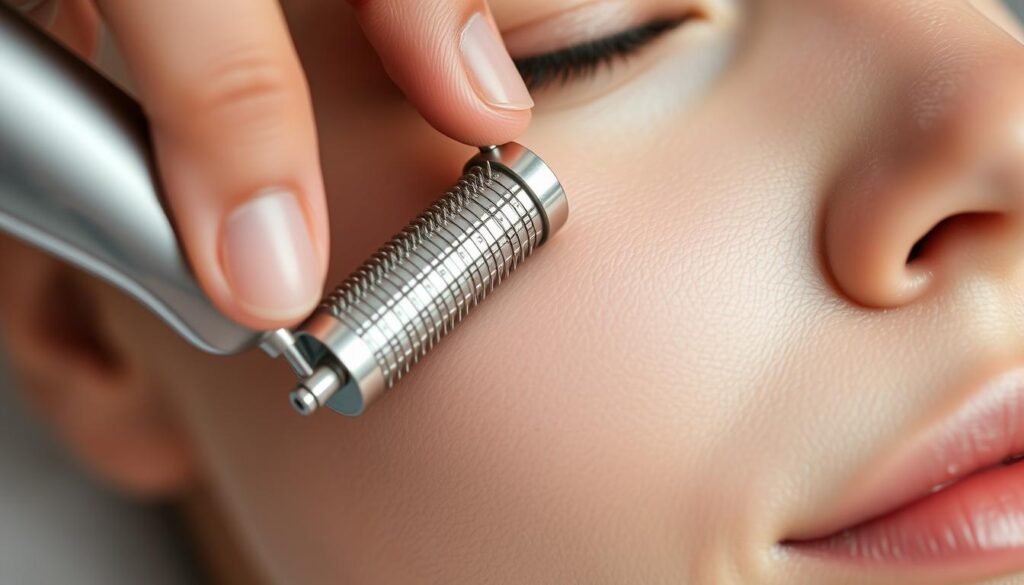
Microneedling makes tiny injuries that help your skin produce collagen and elastin. The length of the needles varies. Short needles are for texture and serum, while long ones are for scars and should be used by a pro.
Using microneedling at home can help with mild scars and make skincare products work better. Make sure to clean your tools, avoid using it on open acne, and don’t overdo it. If you have severe acne, talk to a dermatologist first.
Exfoliants and masks can improve your skin’s texture and control oil. AHAs like glycolic and lactic acid remove dead skin. BHAs, like salicylic acid, clean out pores. Clay masks pull out dirt, and enzyme masks from pumpkin or papaya gently exfoliate and can reduce redness.
Use masks once or twice a week, depending on how your skin reacts. Don’t use too many strong exfoliants at once. If you’re using chemical exfoliants and microneedling, wait a bit before mixing them to avoid irritation.
For red, inflamed skin, water-based gels and spot treatments are good. Aloe vera and cooling gels can help with redness. Over-the-counter benzoyl peroxide and salicylic acid are effective for acne spots.
Be careful with scented or mentholated gels if your skin is sensitive. They can sting and make redness worse. Don’t pop pimples as it can lead to scars and spread bacteria.
Here’s a quick guide to help you pick safe home treatments and know when to see a professional.
| Tool / Product | Primary Benefit | When to Use at Home | When to See a Pro |
|---|---|---|---|
| Microneedling (0.25–0.5 mm) | Improves texture, boosts serum absorption | For mild scarring and texture; clean skin, sterilized device, low frequency | If you have active cysts, deep atrophic scars, or history of keloids |
| Microneedling (>0.5 mm) | Targets deeper atrophic scars via collagen remodeling | Not recommended for unsupervised home use | Professional clinic with sterile technique and follow-up |
| AHAs (glycolic, lactic) | Surface exfoliation, smoother tone | Weekly to twice-weekly, monitor sensitivity | If you experience severe irritation, persistent peeling, or hyperpigmentation |
| BHA (salicylic acid) | Pore penetration, reduces comedones and oil | Use as a leave-on serum or cleanser for oily, acne-prone skin | If breakouts worsen or you have deep nodules |
| Clay masks | Absorbs oil, reduces shine | Once weekly for oily areas | If mask causes excessive dryness or irritation |
| Enzyme masks (pumpkin, papaya) | Gentle exfoliation, reduces redness | One session weekly or as tolerated | When persistent redness or sensitivity follows use |
| Soothing gels (aloe, water-based) | Calms inflammation, hydrates | Apply liberally to irritated areas and after procedures | If irritation persists or you suspect contact dermatitis |
| Spot treatments (benzoyl peroxide, salicylic acid) | Reduces bacteria and unclogs pores | Target active lesions; use sparingly to avoid dryness | If lesions are widespread or fail to improve |
Preventing Future Breakouts and Lifestyle Factors
Keeping your skin clear is more than just using cleansers and getting prescriptions. Small daily choices can greatly affect how often you get skin breakouts. By making steady changes, you can support healthier skin.
Diet, hydration, and mindful eating
What you eat can affect your oil production and inflammation. High-glycemic foods and some dairy can make blemishes worse for some people. Eating low-glycemic carbs, whole foods, lean proteins, and drinking plenty of water can help.
Try keeping a food diary to track when breakouts happen. If dairy or sweets lead to outbreaks, cut them out for four to six weeks. Note any changes. Pair these diet changes with your current medical plan for better acne prevention.
Stress, sleep, and exercise hygiene
Chronic stress can raise hormones that increase oil and inflammation. Regular sleep and stress management, like meditation or yoga, can help lower these hormones. This can reduce the chance of skin breakouts.
When you exercise, shower and cleanse right away. Avoid tight, non-breathable fabrics that trap sweat and bacteria. These habits can help prevent pore irritation and support medical treatments.
Daily habits for fewer flare-ups
Touching or popping pimples can increase infection and scarring risk. Use non-comedogenic, oil-free makeup and remove it each night. Change pillowcases weekly and clean phone screens to reduce oils and bacteria transfer.
Read product labels and choose items that say “non-comedogenic.” Track when breakouts happen against your cycle and lifestyle. If hormones seem to be a factor, talk to your clinician about options like spironolactone or hormonal contraception.
| Focus Area | Practical Tip | Why It Helps |
|---|---|---|
| Diet & Hydration | Choose low-glycemic carbs, drink 8–10 cups water daily, test dairy reduction | Reduces spikes in insulin and inflammation tied to acne causes |
| Stress & Sleep | Use brief daily relaxation, aim for 7–9 hours sleep | Lowers stress hormones that drive oil production and skin breakouts |
| Exercise Hygiene | Wear breathable fabrics, cleanse after workouts | Prevents sweat and bacteria from clogging pores |
| Skin Handling | Avoid picking, change pillowcases weekly, clean phone | Limits infection, reduces scarring, supports acne prevention |
| Products | Use non-comedogenic, oil-free makeup and moisturizers | Minimizes blocked pores that lead to breakouts |
Conclusion
You can fight skin breakouts with the right tools. Use salicylic acid, benzoyl peroxide, and retinoids. Start simple and add new products slowly to avoid skin problems.
Watch what you eat, how you feel, and how much you sleep. These things can help prevent acne for good.
Tools like microneedling and Vitamin C products can help some. But remember, they work best when used carefully. For serious acne, see a dermatologist. They can offer safe treatments and prescription drugs.
Always use sunscreen and pick products that won’t clog your pores. Don’t squeeze or pop pimples to avoid scars. Stick to your routine, get help when needed, and your skin will thank you.
FAQ
What is acne and how do clogged pores form?
Acne happens when hair follicles get clogged with oil and dead skin cells. This creates a place where bad bacteria can grow and cause inflammation. Washing your face too much can make it worse by taking away moisture and making more oil.
Using gentle cleansers twice a day, products like salicylic acid, and non-comedogenic products can help. This helps keep pores from getting clogged.
What are the common types of acne lesions I should know?
There are different kinds of acne lesions. These include whiteheads, blackheads, small red bumps, pus-filled pimples, and deep, painful nodules. Knowing what kind you have helps you choose the right treatment.
Whiteheads and blackheads are best treated with retinoids and BHAs. But, if you have red bumps or painful nodules, you might need something stronger like anti-inflammatories or prescription treatments.
What major factors drive acne flare-ups?
Many things can make acne worse. Hormones, genetics, diet, stress, and certain skincare or makeup products are big contributors. Keeping track of when your acne gets worse can help you find what’s causing it.
This way, you can take steps to prevent it and treat it better.
How does hormonal acne differ from other types, and where does it appear?
Hormonal acne usually shows up around the jawline and chin. It gets worse before your period. It’s caused by hormones that make more oil in your skin.
It can last into adulthood, especially for women. Treatments that target hormones, like birth control or spironolactone, can be very effective.
What is cystic acne and why is it more serious?
Cystic acne is a severe form of acne. It causes deep, painful bumps under the skin. These bumps can leave scars and need strong treatments.
Seeing a dermatologist quickly is important. They can offer antibiotics, steroid injections, or isotretinoin for severe cases.
What over-the-counter (OTC) treatments are essential?
OTC treatments include salicylic acid, benzoyl peroxide, and retinoids. Salicylic acid helps clear pores, benzoyl peroxide kills bacteria, and retinoids help prevent clogs.
Start with small amounts to avoid irritation. Try one product at a time to see how your skin reacts.
When should I consider prescription therapies?
If your acne doesn’t get better with OTC treatments, you might need something stronger. This could be antibiotics, hormonal treatments, or isotretinoin for severe cases.
Seeing a dermatologist is the best way to get these treatments.
What in-office procedures might a dermatologist recommend?
Dermatologists can do many treatments in their office. These include chemical peels, laser treatments, and professional extractions.
They can also do injections for nodules and microneedling for scars. The right treatment depends on your acne and skin type.
What types of acne scars exist and how are they treated?
There are different kinds of acne scars. These include depressed scars, raised scars, and dark spots. Treating them depends on the type.
For depressed scars, treatments like microneedling and lasers can help. Chemical peels and retinoids can improve texture and color. Fillers can also help with deep scars.
Using sunscreen and Vitamin C can prevent dark spots from getting worse.
Are at-home microneedling devices safe and effective?
At-home microneedling devices can help with texture and scars. But, they can also be risky. They might cause infections or not work as well as professional treatments.
Be careful and follow the instructions. It’s also a good idea to use them with professional care.
How should I build a simple, acne-safe daily routine?
Start with a gentle cleanser twice a day. Use products like salicylic acid in the morning and retinoids at night. Moisturize with a non-comedogenic product and wear oil-free sunscreen.
Introduce new products one at a time. This helps you see how your skin reacts. Avoid mixing strong products without advice.
Which products work best for different skin types?
For oily skin, use products with salicylic acid and benzoyl peroxide. For dry skin, try lower-strength retinoids and hydrating creams. For combination skin, use targeted serums and richer moisturizers.
Do diet and lifestyle changes really impact acne?
Yes, diet and lifestyle can affect your acne. Foods high in sugar and dairy might make it worse. Stress, sleep, hydration, and exercise also play a role.
Keep track of what makes your acne worse. This helps you find ways to prevent it.
How should I approach masks, AHAs/BHAs, and exfoliants?
AHAs and BHAs exfoliate and clear pores. Clay masks absorb oil, and enzyme masks gently remove dead skin. Use masks once or twice a week.
Avoid mixing strong exfoliants to prevent irritation. It’s best to get advice on how to use them safely.
What spot treatments and soothing products help active breakouts?
Spot treatments with benzoyl peroxide and salicylic acid can help pimples. Aloe or water-based gels can calm inflammation. But, be careful with products that have menthol if your skin is sensitive.
Avoid picking or popping pimples to prevent scarring and infection.
How long before I should expect to see improvement with treatment?
It can take 4–6 weeks to see results with many treatments. Prescription treatments and procedures might take longer. Isotretinoin can take months to work fully.
Be patient and consistent with your treatment plan.
How do I choose between at-home kits (like Banish) and professional care?
At-home kits can help with texture and scars for some people. But, they might not be as safe or effective as professional treatments. Consider your scar severity and how quickly you want results.
Professional care is best for severe or scarring acne.
When should I see a dermatologist immediately?
See a dermatologist quickly for persistent or severe acne. This includes painful cysts, rapidly forming scars, or if OTC treatments don’t work. Early treatment can prevent scarring and give you access to stronger treatments.
What daily behaviors help prevent future breakouts?
Avoid touching or popping pimples, remove makeup at night, and choose non-comedogenic products. Change pillowcases often, keep phone screens clean, and wash your face after sweating.
Track what makes your acne worse and make changes to prevent it.
Can topical maintenance prevent dark spots and recurrence?
Yes, using topical retinoids, Vitamin C serums, and sunscreen can help. Retinoids and Vitamin C can fade dark spots. Sunscreen prevents them from getting darker.
Consistent maintenance is key to keeping your skin clear.
How should I combine or sequence active treatments safely?
Start with one product at a time and test it on your skin. Many experts recommend using benzoyl peroxide and retinoids separately. This helps avoid irritation.
Getting advice from a professional is best when combining treatments.
